

1,500-year-old blacksmith workshop unearthed at ancient city in southern Türkiye
ENGLISH 24.07.2026 - 15:10, Güncelleme: 24.07.2026 - 15:10
 

1,500-year-old blacksmith workshop unearthed at ancient city in southern Türkiye

The discovery at Seleukeia Sidera preserves nearly every stage of ancient iron production, archaeologists say
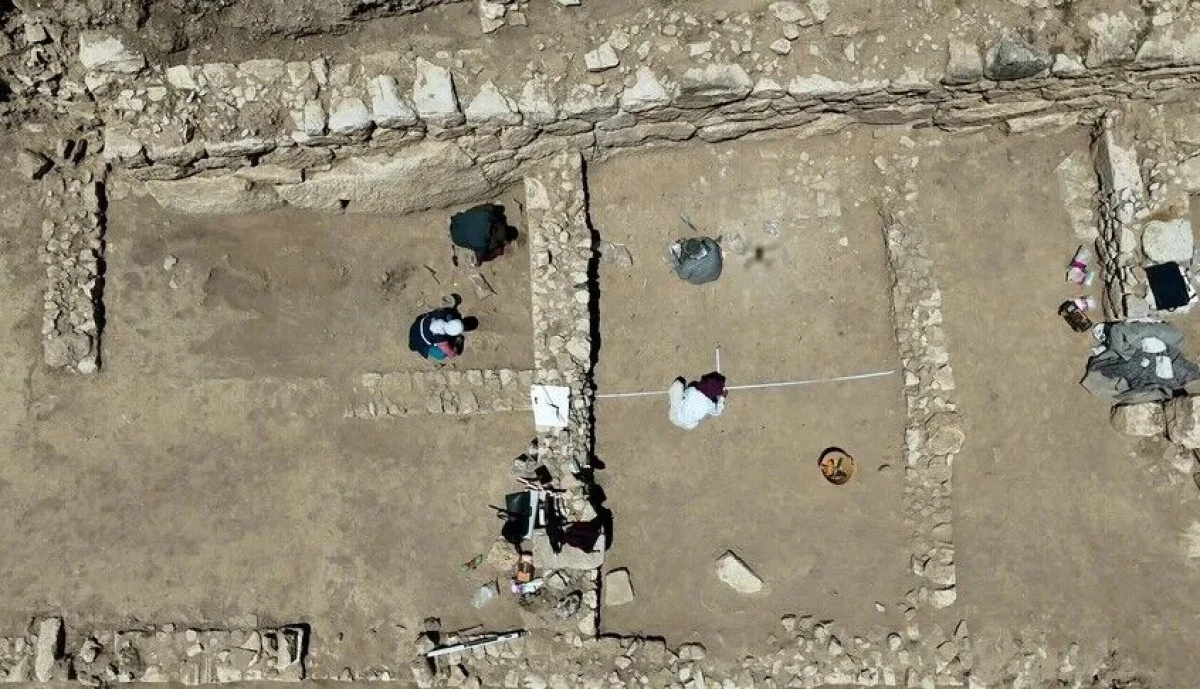
Archaeologists have uncovered a remarkably well-preserved blacksmith workshop dating back about 1,500 years at the ancient city of Seleukeia Sidera in Türkiye's southern Isparta province, offering rare insight into ironworking and industrial activity in the fifth century A.D. The discovery was made during year-round excavations carried out by Suleyman Demirel University in Isparta with permission from Türkiye's Culture and Tourism Ministry. Archaeologists uncovered an iron-production furnace, an anvil, a charcoal storage area, an iron-quenching pool, and numerous ironworking artifacts, revealing nearly every stage of iron production within a single workshop. Isparta Provincial Director of Culture and Tourism Vural Oguzlar told reporters that excavations at Seleukeia Sidera have accelerated this year following an increase in personnel assigned to the project. He said significant discoveries had been made in the city's ancient marketplace, where commercial activity once flourished.   Workshop sheds light on ancient industry Bilge Hurmuzlu Kortholt, head of the Archaeology Department at Suleyman Demirel University and director of the Seleukeia Sidera excavations, said the workshop was identified after surface surveys uncovered iron-production waste and geophysical studies pinpointed the site. She said archaeologists found evidence not only of iron production but also of other manufacturing activities. The excavation uncovered an iron production furnace, an anvil, a charcoal storage area and an iron-quenching pool, while semi-finished horseshoes, nails, knives, and large iron pieces were also recovered. All of the artifacts have been transferred to the Isparta Museum Directorate. Kortholt said the workshop was located in the ancient city's industrial quarter. She said the excavation revealed the architectural layout and spatial organization expected of a complete blacksmith workshop, noting that such well-preserved examples are rare in Anatolia, making the discovery particularly significant. Kortholt said the findings also show that Seleukeia Sidera extended well beyond its 330-hectare (815-acre) urban center, encompassing a broader settlement area that included the present-day communities of Cunur, Savö and Harmanoren. She said the area's two lakes and the Akcay River supported the development of agriculture, animal husbandry, and industry, adding that the latest discoveries indicate Seleukeia Sidera was one of the region's leading economic centers, with a strong industrial quarter and substantial production capacity during the period. Excavations at Seleukeia Sidera began in 2017 under the Isparta Museum Directorate. Since 2019, the site has been excavated under Türkiye's Presidential Decree excavation program, and in 2024 it was included in the Culture and Tourism Ministry's Legacy for the Future archaeological initiative.
The discovery at Seleukeia Sidera preserves nearly every stage of ancient iron production, archaeologists say

Archaeologists have uncovered a remarkably well-preserved blacksmith workshop dating back about 1,500 years at the ancient city of Seleukeia Sidera in Türkiye's southern Isparta province, offering rare insight into ironworking and industrial activity in the fifth century A.D.

The discovery was made during year-round excavations carried out by Suleyman Demirel University in Isparta with permission from Türkiye's Culture and Tourism Ministry.

Archaeologists uncovered an iron-production furnace, an anvil, a charcoal storage area, an iron-quenching pool, and numerous ironworking artifacts, revealing nearly every stage of iron production within a single workshop.

Isparta Provincial Director of Culture and Tourism Vural Oguzlar told reporters that excavations at Seleukeia Sidera have accelerated this year following an increase in personnel assigned to the project.

He said significant discoveries had been made in the city's ancient marketplace, where commercial activity once flourished.


Workshop sheds light on ancient industry

Bilge Hurmuzlu Kortholt, head of the Archaeology Department at Suleyman Demirel University and director of the Seleukeia Sidera excavations, said the workshop was identified after surface surveys uncovered iron-production waste and geophysical studies pinpointed the site.

She said archaeologists found evidence not only of iron production but also of other manufacturing activities.

The excavation uncovered an iron production furnace, an anvil, a charcoal storage area and an iron-quenching pool, while semi-finished horseshoes, nails, knives, and large iron pieces were also recovered. All of the artifacts have been transferred to the Isparta Museum Directorate.

Kortholt said the workshop was located in the ancient city's industrial quarter.

She said the excavation revealed the architectural layout and spatial organization expected of a complete blacksmith workshop, noting that such well-preserved examples are rare in Anatolia, making the discovery particularly significant.

Kortholt said the findings also show that Seleukeia Sidera extended well beyond its 330-hectare (815-acre) urban center, encompassing a broader settlement area that included the present-day communities of Cunur, Savö and Harmanoren.

She said the area's two lakes and the Akcay River supported the development of agriculture, animal husbandry, and industry, adding that the latest discoveries indicate Seleukeia Sidera was one of the region's leading economic centers, with a strong industrial quarter and substantial production capacity during the period.

Excavations at Seleukeia Sidera began in 2017 under the Isparta Museum Directorate. Since 2019, the site has been excavated under Türkiye's Presidential Decree excavation program, and in 2024 it was included in the Culture and Tourism Ministry's Legacy for the Future archaeological initiative.

Habere ifade bırak !
Habere ait etiket tanımlanmamış.
Okuyucu Yorumları (0)

Yorumunuz başarıyla alındı, inceleme ardından en kısa sürede yayına alınacaktır.

Yorum yazarak Topluluk Kuralları’nı kabul etmiş bulunuyor ve turkishpress.co.uk sitesine yaptığınız yorumunuzla ilgili doğrudan veya dolaylı tüm sorumluluğu tek başınıza üstleniyorsunuz. Yazılan tüm yorumlardan site yönetimi hiçbir şekilde sorumlu tutulamaz.
Sitemizden en iyi şekilde faydalanabilmeniz için çerezler kullanılmaktadır, sitemizi kullanarak çerezleri kabul etmiş saylırsınız.