

Journalists under threat in Lebanon amid rising attacks, experts warn
Journalists under threat in Lebanon amid rising attacks, experts warn
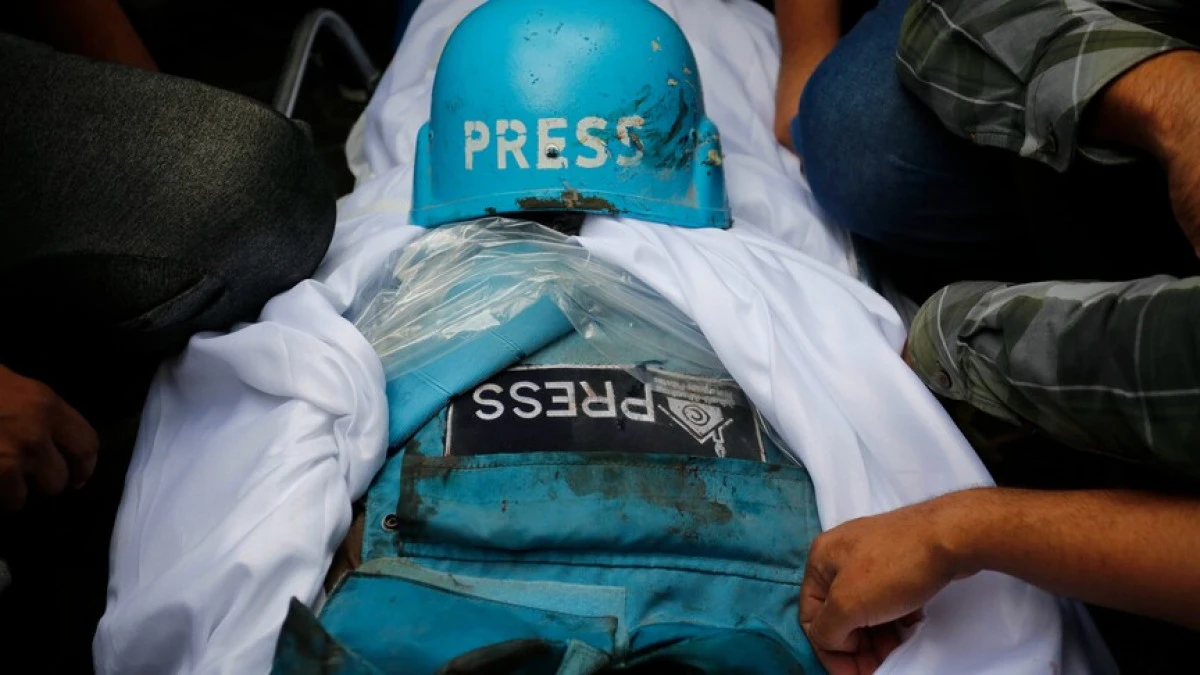

They say killings, surveillance, lack of accountability are worsening press freedom conditions
Journalists in Lebanon face increasing threats, including deadly attacks, surveillance, and legal gaps, experts warned Tuesday, calling for urgent accountability and stronger protections.
Speakers at a hybrid briefing, including representatives from Human Rights Watch and legal and media groups, told reporters in Geneva that violence against journalists is part of a broader pattern.
Elsy Moufarrej, president of the Union of Journalists in Lebanon, said attacks on journalists are not isolated incidents but reflect a “deliberate pattern” aimed at silencing coverage.
“These attacks very clear; our documentation shows that they are deliberate and direct attacks against journalists,” said Ghida Frangieh, a lawyer at Legal Agenda in Beirut.
Participants cited multiple cases of journalists killed in recent years, including while reporting in the field and even in their homes, warning that such incidents may amount to war crimes.
They also highlighted the growing role of surveillance, including drones and the potential use of artificial intelligence, in tracking journalists’ movements.
“In Lebanon, we are constantly under surveillance,” Frangieh said, adding that this raises serious concerns about how journalists are identified and targeted.
The experts said the country has become one of the most dangerous places for media workers, noting that dozens have been killed since 2023.
They warned that journalists now face an impossible choice between clearly identifying themselves for protection or hiding their identity to avoid being targeted.
Speakers criticized the lack of accountability, calling for independent investigations and greater legal action to protect journalists.
Ramzi Kaiss, a Lebanese researcher in the Middle East and North Africa Division at Human Rights Watch, said that Volker Turk, the UN High Commissioner for Human Rights, in a press release issued in May, said that Lebanon was the deadliest country for media workers in 2026.
He described the situation as alarming, explaining that such patterns exist because countries that could have put pressure on Israel failed to do so.
This primarily includes European and Western countries that have been supplying Israel with military aid, assistance, and arms transit that could have been suspended, he said.
Kaiss said it also includes the EU, which could have suspended the trade pillar of its association agreement with Israel.
Yorumunuz başarıyla alındı, inceleme ardından en kısa sürede yayına alınacaktır.