

Precious metals continue to plunge for 2nd consecutive month
ENGLISH 02.11.2026 - 14:45, Güncelleme: 02.11.2026 - 14:45
 

Precious metals continue to plunge for 2nd consecutive month

Gold and silver prices drop amid expectations of high interest rates as investors flock to risk-free cash returns, while industrial precious metals fall more sharply on a negative outlook fueled by fears of a global growth slowdown, expert says
Precious metal prices continued to plummet for the second consecutive month as oil prices climbed, the US dollar strengthened and fears of a global economic slowdown kept investors away from commodities. Since the outbreak of the US-Israeli war with Iran at the end of February, commodity prices have seen sharp volatility, affecting gold, silver, platinum and palladium. Gold started 2026 strongly at $4,313 per ounce, reaching a record high of $5,600 in January and finishing the first month of the year with a 12.4% increase, while it peaked at $5,263 in February. Escalating tensions in the Middle East led to an 11.32% sell-off in March, marking the sharpest monthly drop in gold since the 2008 financial crisis, followed by an 11.7% plunge in June, leading to a 7.1% total loss for the first half of the year. Gold rebounded 10% in August, but ongoing uncertainties led to a drop of 6.6% in September and 6.8% in October, closing the month at $3,876 per ounce. It was the first time gold had dipped below $4,000 since July. Silver followed a similar path, starting the year at $71 per ounce and hitting a record of $121.7 in January, followed by an increase of 12.6%, then a drop of 19.9% in March, 1.9% in April, a slight rebound of 2.2% in May and a decline of 22% in June, ending the first half down 17.3%. Like gold, silver also rebounded in August but fell 7.6% in September and dropped 18.8% in October, ending the month at $49.1 per ounce. It dipped below $50 for the first time since November 2025. The situation for industrial precious metals was even worse, as platinum lost 24.4% by the end of June despite having hit a record of $2,923.3 in January, followed by an 8.5% rise in February and a 17.2% decline in March to $1,960.1. Platinum closed July with a 6.1% gain and August with an 8.9% increase. Platinum dipped 4.6% in September and 16.2% in October, closing the month at $1,434. Palladium followed suit, surging as high as $1,788.7 in February before losing 24.2% in the first half and dropping 19.1% in October to $980. It dipped below $1,000 for the first time since June 2025. Zafer Ergezen, a futures and commodity markets expert, told Anadolu that high oil prices reinforced expectations of sustained inflation, driving up interest rates and prompting investors to flock to cash instead. "Investors are shifting towards risk-free returns and moving away from riskier instruments," he said, noting that the strengthening of the dollar and selling driven by the need for cash affected gold the most despite central bank purchases. He noted that the situation for silver was somewhat worse, while high oil prices reinforced expectations of higher inflation and led to forecasts of a global growth slowdown, prompting the International Monetary Fund (IMF) and the World Bank to revise their growth forecasts. "Silver is more used in industrial applications than gold, so a slowdown in silver demand is expected, and we're seeing a steeper decline in silver than gold," he said. "If oil prices fall towards the end of the war, silver may even outperform gold but high oil prices lead to selling pressure on silver." "The outlook for platinum and palladium is more negative because these metals are generally used much more extensively in industrial applications, so concerns over a slowdown in global growth impact these metals more," he added. Ergezen said that rising demand for electric vehicles (EVs) continued to cause a decline in demand for platinum and palladium, but the supply side for both commodities remained strong. A recovery in the two industrial metals may not be likely any time soon as long as inflation and oil prices remain elevated. He added that these two metals may recover less strongly than silver, even if the war ends and oil prices fall.
Gold and silver prices drop amid expectations of high interest rates as investors flock to risk-free cash returns, while industrial precious metals fall more sharply on a negative outlook fueled by fears of a global growth slowdown, expert says

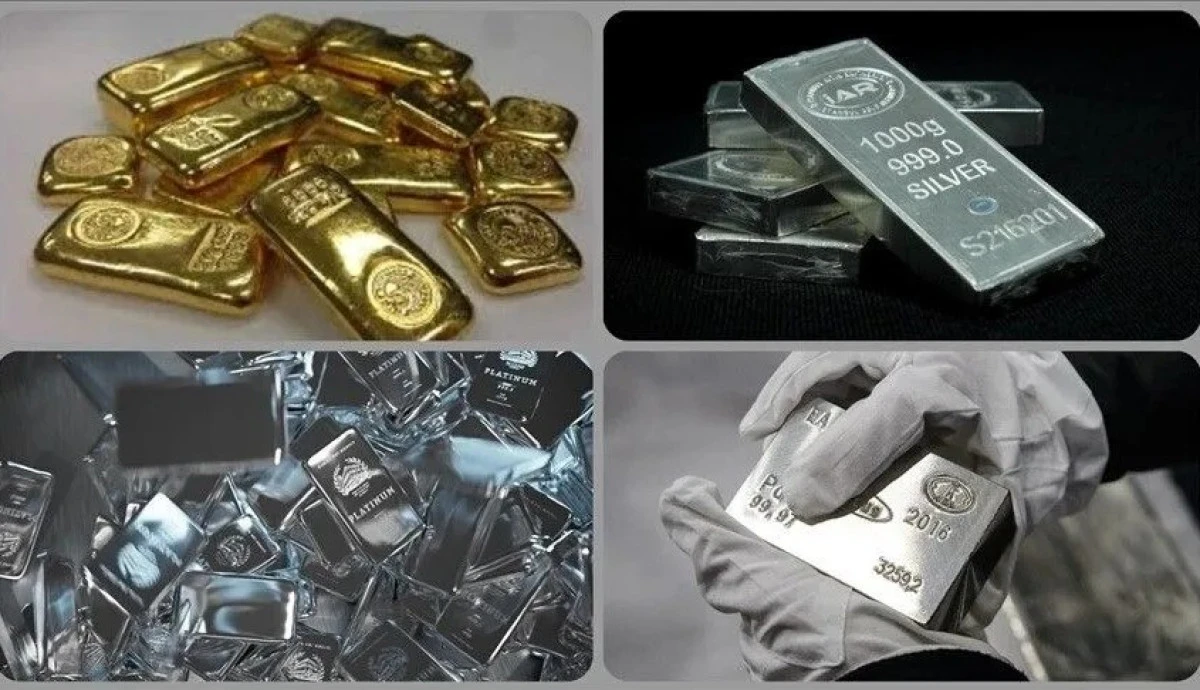
Precio us metal prices continued to plummet for the second consecutive month as oil prices climbed, the US dollar strengthened and fears of a global economic slowdown kept investors away from commodities.

Since the outbreak of the US-Israeli war with Iran at the end of February, commodity prices have seen sharp volatility, affecting gold, silver, platinum and palladium.

Gold started 2026 strongly at $4,313 per ounce, reaching a record high of $5,600 in January and finishing the first month of the year with a 12.4% increase, while it peaked at $5,263 in February.

Escalating tensions in the Middle East led to an 11.32% sell-off in March, marking the sharpest monthly drop in gold since the 2008 financial crisis, followed by an 11.7% plunge in June, leading to a 7.1% total loss for the first half of the year.

Gold rebounded 10% in August, but ongoing uncertainties led to a drop of 6.6% in September and 6.8% in October, closing the month at $3,876 per ounce. It was the first time gold had dipped below $4,000 since July.

Silver followed a similar path, starting the year at $71 per ounce and hitting a record of $121.7 in January, followed by an increase of 12.6%, then a drop of 19.9% in March, 1.9% in April, a slight rebound of 2.2% in May and a decline of 22% in June, ending the first half down 17.3%.

Like gold, silver also rebounded in August but fell 7.6% in September and dropped 18.8% in October, ending the month at $49.1 per ounce. It dipped below $50 for the first time since November 2025.

The situation for industrial precio us metals was even worse, as platinum lost 24.4% by the end of June despite having hit a record of $2,923.3 in January, followed by an 8.5% rise in February and a 17.2% decline in March to $1,960.1. Platinum closed July with a 6.1% gain and August with an 8.9% increase.

Platinum dipped 4.6% in September and 16.2% in October, closing the month at $1,434.

Palladium followed suit, surging as high as $1,788.7 in February before losing 24.2% in the first half and dropping 19.1% in October to $980. It dipped below $1,000 for the first time since June 2025.

Zafer Ergezen, a futures and commodity markets expert, told Anadolu that high oil prices reinforced expectations of sustained inflation, driving up interest rates and prompting investors to flock to cash instead.

"Investors are shifting towards risk-free returns and moving away from riskier instruments," he said, noting that the strengthening of the dollar and selling driven by the need for cash affected gold the most despite central bank purchases.

He noted that the situation for silver was somewhat worse, while high oil prices reinforced expectations of higher inflation and led to forecasts of a global growth slowdown, prompting the International Monetary Fund (IMF) and the World Bank to revise their growth forecasts.

"Silver is more used in industrial applications than gold, so a slowdown in silver demand is expected, and we're seeing a steeper decline in silver than gold," he said. "If oil prices fall towards the end of the war, silver may even outperform gold but high oil prices lead to selling pressure on silver."

"The outlook for platinum and palladium is more negative because these metals are generally used much more extensively in industrial applications, so concerns over a slowdown in global growth impact these metals more," he added.

Ergezen said that rising demand for electric vehicles (EVs) continued to cause a decline in demand for platinum and palladium, but the supply side for both commodities remained strong. A recovery in the two industrial metals may not be likely any time soon as long as inflation and oil prices remain elevated.

He added that these two metals may recover less strongly than silver, even if the war ends and oil prices fall.

Habere ifade bırak !
Habere ait etiket tanımlanmamış.
Okuyucu Yorumları (0)

Yorumunuz başarıyla alındı, inceleme ardından en kısa sürede yayına alınacaktır.
Yorum yazarak Topluluk Kuralları’nı kabul etmiş bulunuyor ve turkishpress.co.uk sitesine yaptığınız yorumunuzla ilgili doğrudan veya dolaylı tüm sorumluluğu tek başınıza üstleniyorsunuz. Yazılan tüm yorumlardan site yönetimi hiçbir şekilde sorumlu tutulamaz.
Sitemizden en iyi şekilde faydalanabilmeniz için çerezler kullanılmaktadır, sitemizi kullanarak çerezleri kabul etmiş saylırsınız.