

As anti-Israel chorus grows, EU stresses that sanctions need ‘unanimity’
As anti-Israel chorus grows, EU stresses that sanctions need ‘unanimity’

'Treatment of the Global Sumud flotilla activists, amongst them EU citizens, was degrading and wrong,' EU spokesperson Anouar El Anouni tells Anadolu
As pressure mounts within Europe for tougher measures against Israel over its mistreatment of activists from a humanitarian aid flotilla, the European Union emphasized that any sanctions decision would require unanimous backing from all 27 member states amid persistent divisions inside the bloc.
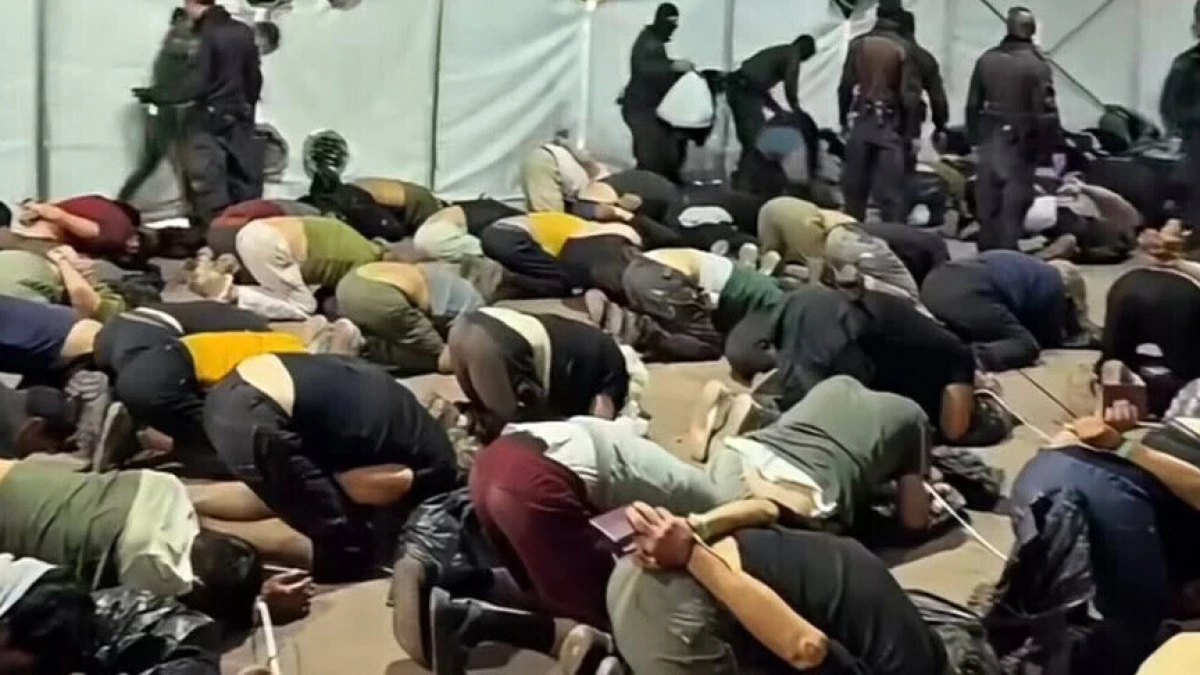
The comments came amid a growing wave of criticism from several European capitals following footage posted by Israeli National Security Minister Itamar Ben-Gvir showing him appear to walk among groups of detained activists, who appeared kneeling in tightly packed formations with their hands tied behind their backs.
In the video, Ben-Gvir is seen waving an Israeli flag and appearing to taunt individuals in custody.
After being released, the detainees arrived in Türkiye on Thursday and recounted in detail the mistreatment and abuse they said they faced while in Israeli custody after being illegally detained in international waters.
In response to a question from Anadolu, EU Commission spokesperson Anouar El Anouni reiterated the bloc's criticism of the treatment of activists, including European Union citizens, detained during the incident.
"The treatment of the Global Sumud flotilla activists, amongst them EU citizens, was degrading and wrong. Israeli Minister Ben-Gvir’s conduct was unbecoming of anyone holding office in a democracy. Every detained person must be treated with safety, dignity, and according to international law," he told a Brussels press briefing
"As the EU, we call on the Israeli government to ensure the protection and dignified treatment of these activists, including several EU citizens," he added.
Ireland, Italy eye suspending agreement with Israel, possible sanctions
The incident has renewed calls from some European governments for concrete punitive measures.
Irish Taoiseac (prime minister) Micheal Martin has written to European Council President Antonio Costa requesting that Israel's treatment of EU citizens aboard the flotilla be formally discussed at the next EU summit.
According to a letter sent to Costa, Martin said EU leaders should consider suspending all or parts of the EU-Israel Association Agreement following what he described as the illegal detention of European citizens by Israeli forces in international waters.
Martin stressed that a "business-as-usual" approach toward Israel is no longer appropriate.
Italian Foreign Minister Antonio Tajani said Rome had formally asked EU foreign policy chief Kaja Kallas to place possible sanctions against Ben-Gvir on the agenda of the next meeting of EU foreign ministers.
The move marks a notable shift from Italy's previous position. Rome had earlier opposed partial or full suspension of the EU-Israel Association Agreement.
Yet despite the growing criticism and increasing calls for action, Brussels stressed that translating political pressure into policy remains procedurally difficult.
"As you all know, EU sanctions are discussed and adopted by the 27 EU member states and this in unanimity," El Anouni said.
He stressed that discussions concerning sanctions are confidential and entirely in the hands of member states.
"We cannot comment on them publicly and this concerns any ongoing planned or potential discussions related to sanctions," he added.
Divided bloc
The issue is expected to surface next week during the informal meeting of EU foreign ministers, known as Gymnich, where they exchange views in a less formal setting.
However, El Anouni stressed that such meetings are not decision-making forums.
Divisions among member states have repeatedly complicated efforts to impose stronger measures.
Ahead of an EU foreign ministers' meeting in Luxembourg in April, Spain, Ireland and Slovenia jointly pressed for stronger action, arguing that Israel may be violating obligations under the EU-Israel Association Agreement.
However, major member states, including Germany and Italy, have so far resisted calls for suspension.
The bloc, however, recently decided to sanction several Israeli occupiers and the groups supporting them in the occupied Palestinian territories, while reiterating several times that measures, including sanctions against Israeli officials, "are on the table."
But as yet no decision has been taken along these lines.
Yorumunuz başarıyla alındı, inceleme ardından en kısa sürede yayına alınacaktır.