

Kremlin accuses UK of trying to stoke anti-Russian sentiment in UN address
Kremlin accuses UK of trying to stoke anti-Russian sentiment in UN address

Peskov calls London's approach ‘utterly shortsighted,’ says it will not help reduce tensions in Europe
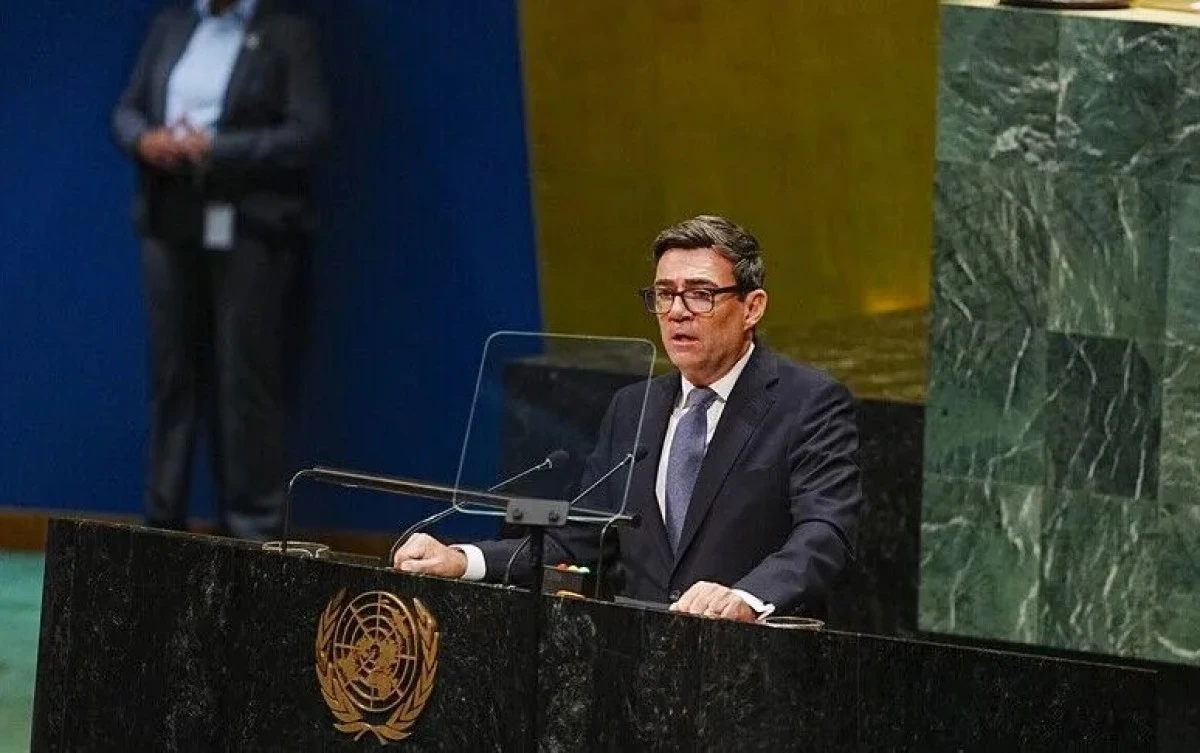
The Kremlin on Wednesday accused the UK of trying to stoke anti-Russian sentiment in Prime Minister Andy Burnham’s address to the UN General Assembly.
Responding to a question about Burnham's announcement of a new center to combat Russian “disinformation,” Kremlin spokesman Dmitry Peskov told a press briefing that the UK premier said nothing new in his UN speech and that London is “stoking Russophobic sentiment and maintaining an atmosphere of total Russophobia.”
“And now, the Germans, the French, and a number of other European states are likely doing the same, in lockstep with Britain,” Peskov said.
He described the approach as an “utterly shortsighted policy” from Moscow's perspective.
“It in no way brings us closer to steps that could eventually lead to a reduction of tensions and de-escalation on the European continent,” he added.
On Tuesday, Burnham told the General Assembly in New York that the UK would be “relentless” in building up its hard power and deterrence but would “not play Russia's game of trading escalatory rhetoric.”
“Unlike Russia, we do not seek confrontation. Instead, we will be prepared but not panicked,” Burnham said.
He accused “Russian agencies” of amplifying far-right narratives and said the UK has evidence that they tried to interfere with the country's 2019 general election.
“The Kremlin spends around £1.3 billion ($1.7 billion) each year on manipulating information,” Burnham said, adding that the UK would begin work on a new National Centre for Information Defence to “detect, attribute and disrupt these kinds of hostile state information attacks.”
Ukraine, Syria
Peskov also said Ukrainian strikes on Russia continue and that there are no indications yet of a shift toward peace negotiations to end the ongoing war.
“As the Russian side, we remain open to peace negotiations,” Peskov said, noting that Moscow’s stance on an in-person meeting between Russian President Vladimir Putin and Ukrainian President Volodymyr Zelenskyy has not changed.
“The leader of the Kiev regime can come to Moscow if he wishes to contact us, and all security guarantees will be offered to him,” he said.
Peskov also argued that an international summit on a Ukrainian settlement would be “inappropriate” and a “waste of time” until “work is completed at the expert level.”
Turning to the fate of Russian military bases in Syria, Peskov said Moscow remains in contact with Damascus.
“We are satisfied with how the discussions are proceeding. And we look forward to continuing to reach an understanding with our Syrian counterparts on the most complex issues,” he added.
Russia maintains two key military facilities in Syria: a naval logistics base in Tartus and the Hmeimim air base in the northwestern province of Latakia.
Last month, Damascus and Moscow announced a memorandum of understanding to reorganize Russia's presence at the Hmeimim and Tartus bases following about 18 months of negotiations.
The Syrian Foreign Ministry said on Aug. 9 that under the memorandum, Syria would assume control of civilian facilities, while Russian military facilities would be redefined as joint training and rehabilitation centers under new arrangements.
The memorandum gave the two sides up to three months to complete the transition.
Yorumunuz başarıyla alındı, inceleme ardından en kısa sürede yayına alınacaktır.