

Three years of genocide: US public support for Israel erodes over Gaza atrocities
Three years of genocide: US public support for Israel erodes over Gaza atrocities
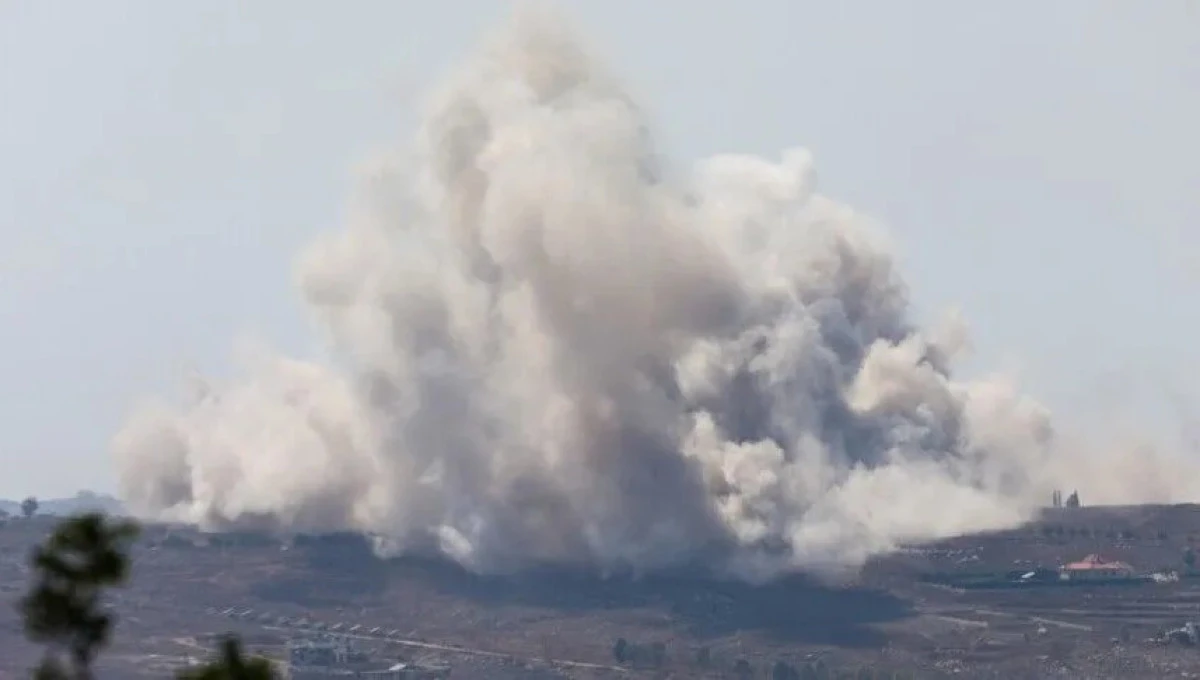

Broad voter skepticism challenges Washington as negative views of Israel reach historic highs across political spectrum
Longstanding bipartisan support for US policy toward Israel is weakening among American voters, with growing majorities questioning unconditional US military aid and diplomatic support following the genocide in Gaza and Israel’s continued occupation of the West Bank.
"What we're seeing in the United States is quite unprecedented," British-Israeli analyst Daniel Levy told Anadolu.
Voters across ideological spectrums are now "questioning fundamentally whether this relationship serves America, serves the American taxpayer, serves American national security," he said.
Levy, who also heads the New York-based non-profit US/Middle East Project, said extensive campaign finance, institutional lobbying, and media consolidation have insulated lawmakers from the shifting public mood.
The tension, he noted, raises critical questions over whether Washington can maintain policies that run contrary to the national consensus.
Levy pointed to the UK, saying the former Labour government under Keir Starmer lost support after leaders ignored voters’ views on Gaza and Palestinian rights.
He said the shift, which brought Andy Burnham and Ed Miliband to power, could be replicated in Washington.
Not an isolated movement
The decline in support represents a nationwide phenomenon rather than an isolated movement.
Polling conducted by the Pew Research Center in March revealed that 60% of all US adults hold an unfavorable view of Israel, rising from 53% in 2025 and 42% in 2022.
The survey further revealed that 59% express little to no confidence in Israeli Prime Minister Benjamin Netanyahu.
Similarly, a Marquette Law School survey in September found that favorability toward Israel has been declining for 20 months.
The latest polling showed 59% of respondents viewed Israel unfavorably, with 55% maintaining that Washington provides it too much military aid.
Overall approval for Israel's military campaign in Gaza has mirrored this downward trajectory, with Gallup recording nationwide approval at a record-low 32% in 2025, while 60% voiced disapproval.
A February Gallup poll found sympathy for Palestinians edging ahead of Israelis nationally for the first time at 41% to 36%.
An Economist/YouGov survey conducted in September showed 26% of Americans saying they sympathized more with Israelis, compared with 25% who sympathized more with Palestinians, the narrowest gap YouGov has recorded on the question.
An AP-NORC survey in June found that 31% of all US adults say Israel’s military actions in Gaza constitute genocide. Only two out of 10 said they do not count as genocide.
These trends have prompted acknowledgement from former Israeli Prime Minister Naftali Bennett.
In a July essay in TIME, Bennett warned of a "troubling trend in public opinion, particularly among younger Americans."
In a podcast he appeared separately, he said Israel is “now associated with genocide and baby killers," just like Italy is associated with “pasta and spaghetti.”
To counter the decline in US public support and being unable to "justify its own actions," Levy said, Israel has latched onto antisemitism by expanding the definition of the term. Many Jewish people are “not buying this,” he said.
Levy emphasized that stances on the Israeli-Palestinian conflict now function as a fundamental measure of political integrity for voters.
"Positions on Israel-Palestine have become almost a central authenticity test: Can I trust a politician?" Levy said. "If you can't get this issue right ... how can we trust you on anything else?"
Ideological fracture on American right
The erosion of support has opened significant fractures within the Republican Party, challenging decades of tradition.
A Pew survey indicated that 57% of Republicans aged 18 to 49 now view Israel unfavorably, reflecting a push within the America First movement against foreign expenditures and international military entanglements.
Prominent conservative figures have voiced direct criticism of the bilateral relationship.
Vice President JD Vance has publicly criticized Israeli officials on several occasions over their opposition to the Trump administration’s interim deal with Iran and over Israeli military operation in Lebanon.
Media commentator Tucker Carlson claimed that US President Donald Trump had become a "hostage" under Netanyahu's "total control," characterizing the dynamic as "slavery."
Former Rep. Marjorie Taylor Greene has been questioning foreign assistance priorities and Rep. Thomas Massie introduced an amendment to eliminate all US foreign assistance to Israel.
Shift in traditional lobbying
This shifting political terrain has transformed traditional lobbying dynamics.
In Michigan, Republican Senate nominee Mike Rogers requested that the American Israel Public Affairs Committee (AIPAC) refrain from running advertisements or campaigning openly on his behalf against Democrat Abdul El-Sayed.
"Having the endorsement of the Israel lobby has gone from being a blessing for the candidate who is endorsed to a curse," Levy said.
Donors have adapted by deploying political financing through independent expenditure channels created by the Supreme Court's Citizens United ruling.
"What we increasingly see … is pro-Israel money being used in campaigns where Israel isn't mentioned," Levy said.
Generational divide
While the erosion spans all demographics, the divide remains most pronounced among younger Americans.
"The shift is most stark, is most attention-grabbing when you filter for the age demographic," Levy said, attributing the divide to the channels through which younger citizens consume news.
He noted that younger audiences increasingly bypass mainstream media, which he argued carries inherent biases and remains vulnerable to commercial and political pressures.
Surveys reflect this stark gradient.
Gallup found that approval of Israel's military operations dropped to just 9% among adults aged 18 to 34.
A Pew survey from May showed that 58% of adults under 30 hold a favorable view of the Palestinians.
In addition, Harvard University's Spring 2026 Youth Poll found that 46% of Americans aged 18 to 29 viewed ties with Israel as a burden, compared to only 16% who consider them a benefit.
Levy explained that the generational divergence is "not just on the Democrat side," noting that "a real shift on the Republican side" is emerging even across "the evangelical Christian community," which long served as an essential pillar of backing for Israel.
The generational backlash ignited mass campus demonstrations in 2024, starting with student encampments at Columbia University that quickly expanded across more than 130 institutions nationwide.
Subsequent police raids, suspensions, and donor crackdowns further entwined foreign policy debates with domestic free expression.
Beyond Netanyahu
Levy rejected a prevailing narrative that the declining American support is merely an isolated backlash against Netanyahu and far-right ministers such as Itamar Ben-Gvir and Bezalel Smotrich.
He described the political crisis as deeply structural.
He said that elements within the pro-Israel advocacy network are actively pushing an anti-Netanyahu narrative to preserve broader bilateral ties.
By placing blame solely on the current leadership, Levy argued, institutional defenders hope an electoral defeat in the upcoming vote will let them declare, “Netanyahu’s gone! Problem solved,” and engineer a renewed diplomatic “honeymoon” with the American public.
However, Levy stressed that systemic policies extend far beyond individual personalities.
No Zionist party running in the upcoming Israeli elections is speaking about “Palestinian statehood, ending occupation, withdrawing, ending settlements," Levy said.
Prominent figures within the so-called moderate opposition bloc frequently attempt to appear "even more extreme than Netanyahu."
Levy cautioned that while a change in government might generate a brief sigh of relief in Western capitals, the core policies of occupation and military force will persist unchanged in the absence of outside pressure.
Looking ahead, Levy outlined three possible paths: continued support for Israel despite declining public backing; a decisive break that makes future US administrations less supportive; or deeper US involvement in regional conflicts that accelerates American decline and leaves Israel increasingly isolated.
Yorumunuz başarıyla alındı, inceleme ardından en kısa sürede yayına alınacaktır.