

Turkish foreign minister says peace in Ukraine war essential for regional security
ENGLISH 08.06.2026 - 17:53, Güncelleme: 08.06.2026 - 17:53
 

Turkish foreign minister says peace in Ukraine war essential for regional security

Hakan Fidan warns battlefield and diplomatic deadlock fueling tensions, calls for sustained efforts toward negotiated settlement
Turkish Foreign Minister Hakan Fidan said Monday that achieving peace in the Russia-Ukraine war is essential for the stability and security of the region, while emphasizing the growing strategic importance of cooperation among Türkiye, Azerbaijan, and Georgia. "The war continuing in our north directly affects the security of our region. We see achieving peace in the Russia-Ukraine war as essential for the stability and security of our region. We believe that this diplomatic process and efforts toward peace must continue with determination," Fidan said. The minister spoke at a joint press conference following the 10th Trilateral Meeting of the Foreign Ministers of Türkiye, Azerbaijan, and Georgia at Ciragan Palace in Istanbul, alongside his Azerbaijani and Georgian counterparts, Jeyhun Bayramov and Maka Botchorishvili. Fidan expressed concern over what he described as a deadlock both on the battlefield and in diplomatic efforts. "We are all following with concern the current impasse in both the battlefield and diplomatic process. The steps taken by the parties to turn this deadlock to their advantage are unfortunately further increasing tensions on the ground," he said. Referring to recent attacks in the Black Sea and Sea of Azov, Fidan said they demonstrated the potentially severe consequences of the conflict and extended condolences to Azerbaijan over the latest incident that resulted in loss of life.   Results-oriented platform Fidan said the trilateral mechanism had evolved into a results-oriented platform that fosters trust across the region. "Today, we are holding the tenth meeting of the trilateral mechanism that we established with a sense of regional ownership. Our meeting has once again demonstrated that this mechanism has become a platform for consultation that produces results and builds confidence in our region," Fidan said. The mechanism, which has operated uninterruptedly for nearly 14 years, has contributed to political dialogue, economic integration, transportation, energy security, trade, and stronger people-to-people ties, he added. "We see this mechanism not only as serving the common interests of our three countries, but also as one of the guarantees of peace, stability, and sustainable prosperity in the South Caucasus," Fidan said.   Energy security, Middle Corridor highlighted Fidan stressed that geopolitical tensions, economic uncertainty, and growing concerns over energy security have increased the value of regional cooperation. "In such a period, the environment of peace and cooperation we have established in our region represents genuine strategic value," he said, noting that stronger connectivity among the three countries contributes to stability, energy supply security, and economic resilience from Europe to Asia. He said joint energy infrastructure projects had helped shield the region from global energy crises and outlined a goal of creating a more integrated region through energy, transportation, and communications networks. According to Fidan, the strengthening role of the Middle Corridor has become the most tangible manifestation of that objective. He also described the June 2 ceremony marking the Georgian section of the Baku-Tbilisi-Kars railway reaching full operational capacity as a significant milestone and said maximizing the benefits of the corridor would generate greater added value for the region.   Support for Azerbaijan-Armenia peace process Fidan said the three ministers reaffirmed a shared understanding that stability, peace, and prosperity in the South Caucasus should be built on sincere and constructive cooperation. "We want our region to be known for development projects rather than conflicts and for shared prosperity and connectivity projects rather than divisions," he said. He described the ongoing peace process between Azerbaijan and Armenia as the most promising example of that vision. "We support the peace process between Azerbaijan and Armenia. We also hope that Azerbaijan's legitimate concerns will be addressed and that the peace agreement will be signed without delay," Fidan said. He added that Türkiye's normalization process with Armenia continues in close coordination with Azerbaijan. "To us, the main opportunity and goal before the South Caucasus is this: as the foundations of peace grow stronger, connectivity projects will produce even stronger results. As connectivity strengthens, the social and economic foundations of peace will become more firmly rooted," he said.   Iran-US talks discussed Despite positive developments in the South Caucasus, Fidan warned that the broader regional security environment continues to face serious risks. He said ministers discussed ongoing negotiations between Iran and the US and stressed the importance of preventing a conflict that could bring both the region and the world "to the brink of disaster." Fidan said Türkiye continues to maintain contacts with both Washington and Tehran while consulting closely with regional countries, adding that Ankara would continue supporting diplomacy and dialogue during this critical period.   Black Sea navigation security deteriorating Responding to journalists' questions, Fidan said maritime security in the Black Sea has been steadily deteriorating as the war expands. "The unfortunate incidents mentioned in the question have repeatedly demonstrated how justified our President Recep Tayyip Erdogan's sensitivity toward securing a ceasefire in the Russia-Ukraine war has been from the very beginning," he said. Fidan noted that the conflict's effects have spread beyond the immediate battlefield, pointing to weapons and ammunition seen in the Baltic states of Estonia, Lithuania, and Latvia, as well as Romania. He added that mines and unmanned maritime vehicles had drifted as far as the Turkish Straits and that Georgia had also become vulnerable to attacks. "As the war continues, we are seeing how geographically widespread it is becoming. The parties are now seeking to strike a wider range of targets in order to alter the existing military balance. "There are almost no longer any limits regarding infrastructure or superstructure targets. This demonstrates the destructive impact of the war," he said.   Concern over civilian shipping Fidan recalled Türkiye's role in facilitating the Black Sea Grain Initiative and described the agreement as a historic success. "Likewise, the gradual decline in navigational safety in the Black Sea due to the expansion of the war is concerning for all of us," he said. He stressed the importance of ensuring that Turkish and other civilian vessels are not targeted and warned that drones, missiles, and identification errors in combat zones could lead to further tragedies. Fidan urged fishing boats and commercial vessels to coordinate closely with relevant authorities while operating in territorial waters and said Türkiye continues to monitor developments closely. "But solving the issue at its root will be the greatest answer to all these problems. That is why we place great emphasis on ceasefire negotiations," he said.   Regional cooperation model for other regions Fidan said Türkiye views regional ownership and cooperation as key tools for achieving stability and development and argued that the trilateral model established with Azerbaijan and Georgia could also be applied elsewhere. Similar frameworks should be pursued in the Balkans and the Middle East to promote peace and stability, he suggested. "Our goal is to establish regional cooperation and peace in all strategic basins where we are present, prevent conflicts or reduce their intensity where possible, and create an environment that facilitates development, prosperity, freedom, and human rights," Fidan said. He added that long-standing instability in the South Caucasus, often influenced by actors outside the region, should increasingly be transformed into stability led by regional countries themselves, supported by international cooperation. Fidan thanked his Azerbaijani and Georgian counterparts, saying Türkiye, Azerbaijan, and Georgia continue to advance an exemplary model of regional ownership and cooperation.
Hakan Fidan warns battlefield and diplomatic deadlock fueling tensions, calls for sustained efforts toward negotiated settlement

Turkish Foreign Minister Hakan Fidan said Monday that achieving peace in the Russia- Ukraine war is essential for the stability and security of the region, while emphasizing the growing strategic importance of cooperation among Türkiye, Azerbaijan, and Georgia.

"The war continuing in our north directly affects the security of our region. We see achieving peace in the Russia- Ukraine war as essential for the stability and security of our region. We believe that this diplomatic process and efforts toward peace must continue with determination," Fidan said.

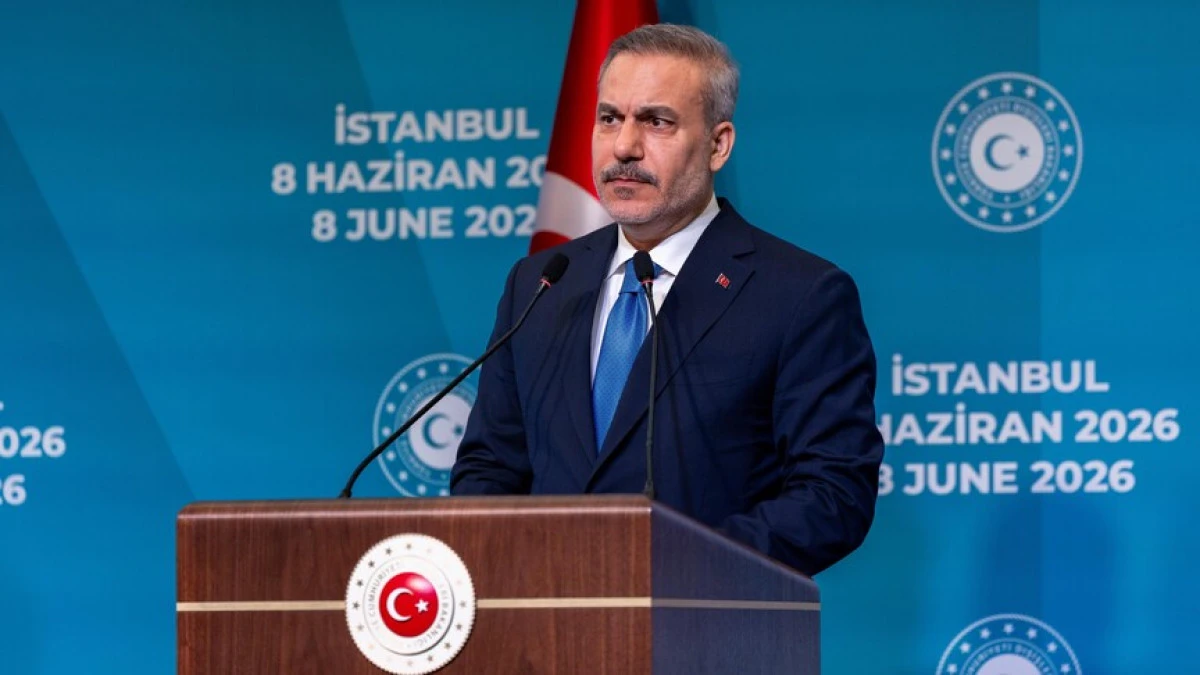
The minister spoke at a joint press conference following the 10th Trilateral Meeting of the Foreign Ministers of Türkiye, Azerbaijan, and Georgia at Ciragan Palace in Istanbul, alongside his Azerbaijani and Georgian counterparts, Jeyhun Bayramov and Maka Botchorishvili.

Fidan expressed concern over what he described as a deadlock both on the battlefield and in diplomatic efforts.

"We are all following with concern the current impasse in both the battlefield and diplomatic process. The steps taken by the parties to turn this deadlock to their advantage are unfortunately further increasing tensions on the ground," he said.

Referring to recent attacks in the Black Sea and Sea of Azov, Fidan said they demonstrated the potentially severe consequences of the conflict and extended condolences to Azerbaijan over the latest incident that resulted in loss of life.


Results-oriented platform

Fidan said the trilateral mechanism had evolved into a results-oriented platform that fosters trust across the region.

"Today, we are holding the tenth meeting of the trilateral mechanism that we established with a sense of regional ownership. Our meeting has once again demonstrated that this mechanism has become a platform for consultation that produces results and builds confidence in our region," Fidan said.

The mechanism, which has operated uninterruptedly for nearly 14 years, has contributed to political dialogue, economic integration, transportation, energy security, trade, and stronger people-to-people ties, he added.

"We see this mechanism not only as serving the common interests of our three countries, but also as one of the guarantees of peace, stability, and sustainable prosperity in the South Caucasus," Fidan said.


Energy security, Middle Corridor highlighted

Fidan stressed that geopolitical tensions, economic uncertainty, and growing concerns over energy security have increased the value of regional cooperation.

"In such a period, the environment of peace and cooperation we have established in our region represents genuine strategic value," he said, noting that stronger connectivity among the three countries contributes to stability, energy supply security, and economic resilience from Europe to Asia.

He said joint energy infrastructure projects had helped shield the region from global energy crises and outlined a goal of creating a more integrated region through energy, transportation, and communications networks.

According to Fidan, the strengthening role of the Middle Corridor has become the most tangible manifestation of that objective.

He also described the June 2 ceremony marking the Georgian section of the Baku-Tbilisi-Kars railway reaching full operational capacity as a significant milestone and said maximizing the benefits of the corridor would generate greater added value for the region.


Support for Azerbaijan-Armenia peace process

Fidan said the three ministers reaffirmed a shared understanding that stability, peace, and prosperity in the South Caucasus should be built on sincere and constructive cooperation.

"We want our region to be known for development projects rather than conflicts and for shared prosperity and connectivity projects rather than divisions," he said.

He described the ongoing peace process between Azerbaijan and Armenia as the most promising example of that vision.

"We support the peace process between Azerbaijan and Armenia. We also hope that Azerbaijan's legitimate concerns will be addressed and that the peace agreement will be signed without delay," Fidan said.

He added that Türkiye's normalization process with Armenia continues in close coordination with Azerbaijan.

"To us, the main opportunity and goal before the South Caucasus is this: as the foundations of peace grow stronger, connectivity projects will produce even stronger results. As connectivity strengthens, the social and economic foundations of peace will become more firmly rooted," he said.


Iran-US talks discussed

Despite positive developments in the South Caucasus, Fidan warned that the broader regional security environment continues to face serious risks.

He said ministers discussed ongoing negotiations between Iran and the US and stressed the importance of preventing a conflict that could bring both the region and the world "to the brink of disaster."

Fidan said Türkiye continues to maintain contacts with both Washington and Tehran while consulting closely with regional countries, adding that Ankara would continue supporting diplomacy and dialogue during this critical period.


Black Sea navigation security deteriorating

Responding to journalists' questions, Fidan said maritime security in the Black Sea has been steadily deteriorating as the war expands.

"The unfortunate incidents mentioned in the question have repeatedly demonstrated how justified our President Recep Tayyip Erdogan's sensitivity toward securing a ceasefire in the Russia- Ukraine war has been from the very beginning," he said.

Fidan noted that the conflict's effects have spread beyond the immediate battlefield, pointing to weapons and ammunition seen in the Baltic states of Estonia, Lithuania, and Latvia, as well as Romania.

He added that mines and unmanned maritime vehicles had drifted as far as the Turkish Straits and that Georgia had also become vulnerable to attacks.

"As the war continues, we are seeing how geographically widespread it is becoming. The parties are now seeking to strike a wider range of targets in order to alter the existing military balance.

"There are almost no longer any limits regarding infrastructure or superstructure targets. This demonstrates the destructive impact of the war," he said.


Concern over civilian shipping

Fidan recalled Türkiye's role in facilitating the Black Sea Grain Initiative and described the agreement as a historic success.

"Likewise, the gradual decline in navigational safety in the Black Sea due to the expansion of the war is concerning for all of us," he said.

He stressed the importance of ensuring that Turkish and other civilian vessels are not targeted and warned that drones, missiles, and identification errors in combat zones could lead to further tragedies.

Fidan urged fishing boats and commercial vessels to coordinate closely with relevant authorities while operating in territorial waters and said Türkiye continues to monitor developments closely.

"But solving the issue at its root will be the greatest answer to all these problems. That is why we place great emphasis on ceasefire negotiations," he said.


Regional cooperation model for other regions

Fidan said Türkiye views regional ownership and cooperation as key tools for achieving stability and development and argued that the trilateral model established with Azerbaijan and Georgia could also be applied elsewhere.

Similar frameworks should be pursued in the Balkans and the Middle East to promote peace and stability, he suggested.

"Our goal is to establish regional cooperation and peace in all strategic basins where we are present, prevent conflicts or reduce their intensity where possible, and create an environment that facilitates development, prosperity, freedom, and human rights," Fidan said.

He added that long-standing instability in the South Caucasus, often influenced by actors outside the region, should increasingly be transformed into stability led by regional countries themselves, supported by international cooperation.

Fidan thanked his Azerbaijani and Georgian counterparts, saying Türkiye, Azerbaijan, and Georgia continue to advance an exemplary model of regional ownership and cooperation.

Habere ifade bırak !
Habere ait etiket tanımlanmamış.
Okuyucu Yorumları (0)

Yorumunuz başarıyla alındı, inceleme ardından en kısa sürede yayına alınacaktır.

Yorum yazarak Topluluk Kuralları’nı kabul etmiş bulunuyor ve turkishpress.co.uk sitesine yaptığınız yorumunuzla ilgili doğrudan veya dolaylı tüm sorumluluğu tek başınıza üstleniyorsunuz. Yazılan tüm yorumlardan site yönetimi hiçbir şekilde sorumlu tutulamaz.
Sitemizden en iyi şekilde faydalanabilmeniz için çerezler kullanılmaktadır, sitemizi kullanarak çerezleri kabul etmiş saylırsınız.