

Türkiye’s orbital ambitions, constellations, equatorial spaceport take center stage at IAC summit
ENGLISH 06.10.2026 - 15:33, Güncelleme: 06.10.2026 - 15:33
 

Türkiye’s orbital ambitions, constellations, equatorial spaceport take center stage at IAC summit


Turkish aerospace leaders reveal plans for 198-satellite mega-constellation, detail ongoing Somali launch site construction as part of Türkiye’s space autonomy during Antalya summit’s dedicated panel
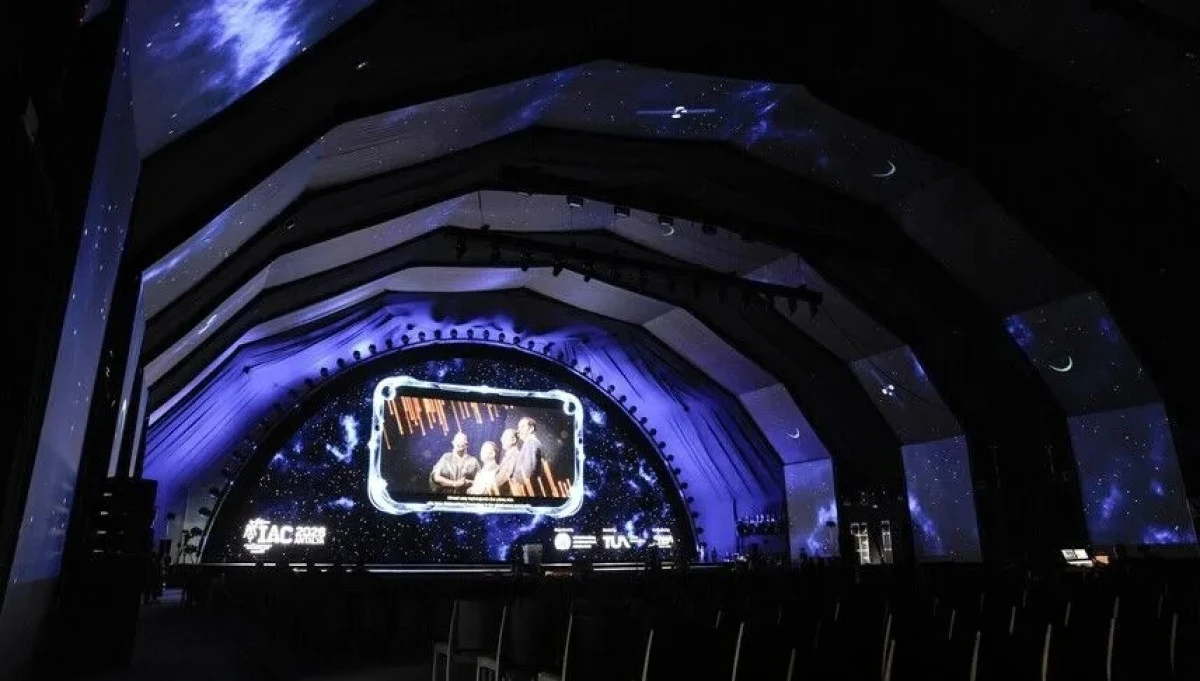
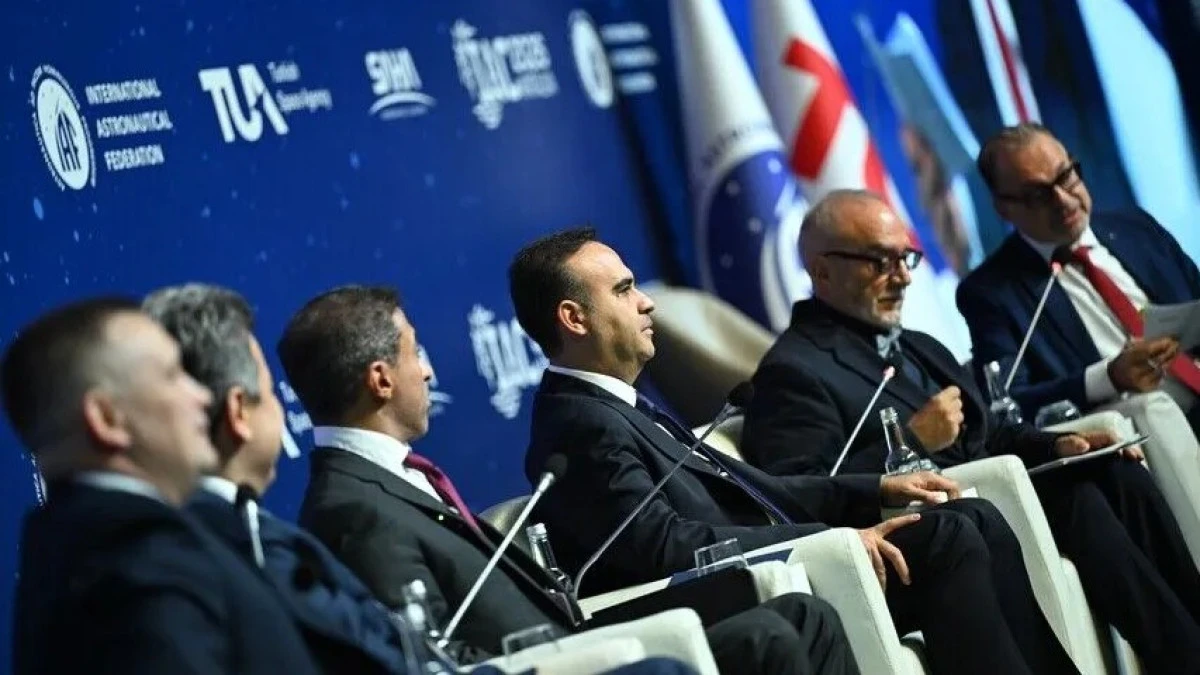
Türkiye’s expanding orbital ambitions, highlighted by a mega-constellation and an independent spaceport in Somalia, take center stage at the 77th International Astronautical Congress (IAC). A wide-ranging panel mapped out the future of space exploration at the event running from Monday until Friday, during which aerospace leaders detailed how national infrastructure projects and private space stations are reshaping the global orbital ecosystem. Organized by the International Astronautical Federation (IAF), with Anadolu as its global communications partner, the congress is being held at the Antalya NEST Congress Center under the coordination of the Industry and Technology Ministry and co-hosted by the Turkish Space Agency and SAHA Istanbul. Türkiye’s Aselsan revealed plans to launch the first satellite of its state-of-the-art Astralink (Gokbagi) low-Earth-orbit (LEO) constellation within two years as part of a broader 198-satellite communications network. The project was initiated late last year to serve Türkiye and its allies, while the planned orbital network is expected to integrate over 1 million terrestrial user terminals deployed across operational fields, Aselsan CEO Ahmet Akyol said during the panel. Building on 50 years of experience, Akyol stated that the constellation will run on domestic microchips, proprietary communications waveforms and subsystems developed by the Turkish defense ecosystem to ensure secure and uninterrupted connectivity amid a broader shift from solitary satellites to interconnected constellations, mirroring the global paradigm shift in modern defense, the economy and public infrastructure. Arif Karabeyoglu, a board member of the Turkish Space Agency (TUA), stated that developing independent access to Earth’s orbit has become key for mid-sized spacefaring countries, as global launch capacity surged tenfold over the past decade from 300 tons to 3,000 tons, while costs went down. Karabeyoglu said that launch capabilities have become all the more important for countries like Türkiye, which is building a spaceport in Somalia that will provide technical advantages such as immediate proximity to the equator, range safety controls and ideal atmospheric conditions for launches, both for domestic vehicles and global operators. Astronaut Michael Lopez-Alegria, senior vice president of human spaceflight at Axiom Space, stated that Axiom aims to prepare its commercial platform before the International Space Station (ISS) is eventually decommissioned and deorbited, while praising Türkiye’s growing role in crewed spaceflight with the successful Ax-3 mission that carried the nation’s first space traveler, Alper Gezeravci, into orbit. Hasan Huseyin Ertok, CEO of Fergani Space, stated that the space and telecommunications sectors have developed rapidly in the past five years and will become even more prominent in the coming decades, while a major race is underway in the geostationary sector, with every firm and country seeking new solutions and services in the field. Mehmet Nefes, director of Türkiye’s Scientific and Technological Research Institution (Tubitak) Space Institute, said that the country’s lunar exploration program involves domestic research institutes, universities and defense firms, going beyond a simple surface landing.
Turkish aerospace leaders reveal plans for 198-satellite mega-constellation, detail ongoing Somali launch site construction as part of Türkiye’s space autonomy during Antalya summit’s dedicated panel

Türkiye’s expanding orbital ambitions, highlighted by a mega-constellation and an independent spaceport in Somalia, take center stage at the 77th International Astronautical Congress (IAC).

A wide-ranging panel mapped out the future of space exploration at the event running from Monday until Friday, during which aerospace leaders detailed how national infrastructure projects and private space stations are reshaping the global orbital ecosystem.

Organized by the International Astronautical Federation (IAF), with Anadolu as its global communications partner, the congress is being held at the Antalya NEST Congress Center under the coordination of the Industry and Technology Ministry and co-hosted by the Turkish Space Agency and SAHA Istanbul.

Türkiye’s Aselsan revealed plans to launch the first satellite of its state-of-the-art Astralink (Gokbagi) low-Earth-orbit (LEO) constellation within two years as part of a broader 198-satellite communications network.

The project was initiated late last year to serve Türkiye and its allies, while the planned orbital network is expected to integrate over 1 million terrestrial user terminals deployed across operational fields, Aselsan CEO Ahmet Akyol said during the panel.

Building on 50 years of experience, Akyol stated that the constellation will run on domestic microchips, proprietary communications waveforms and subsystems developed by the Turkish defense ecosystem to ensure secure and uninterrupted connectivity amid a broader shift from solitary satellites to interconnected constellations, mirroring the global paradigm shift in modern defense, the economy and public infrastructure.

Arif Karabeyoglu, a board member of the Turkish Space Agency (TUA), stated that developing independent access to Earth’s orbit has become key for mid-sized spacefaring countries, as global launch capacity surged tenfold over the past decade from 300 tons to 3,000 tons, while costs went down.

Karabeyoglu said that launch capabilities have become all the more important for countries like Türkiye, which is building a spaceport in Somalia that will provide technical advantages such as immediate proximity to the equator, range safety controls and ideal atmospheric conditions for launches, both for domestic vehicles and global operators.

Astronaut Michael Lopez-Alegria, senior vice president of human spaceflight at Axiom Space, stated that Axiom aims to prepare its commercial platform before the International Space Station (ISS) is eventually decommissioned and deorbited, while praising Türkiye’s growing role in crewed spaceflight with the successful Ax-3 mission that carried the nation’s first space traveler, Alper Gezeravci, into orbit.

Hasan Huseyin Ertok, CEO of Fergani Space, stated that the space and telecommunications sectors have developed rapidly in the past five years and will become even more prominent in the coming decades, while a major race is underway in the geostationary sector, with every firm and country seeking new solutions and services in the field.

Mehmet Nefes, director of Türkiye’s Scientific and Technological Research Institution (Tubitak) Space Institute, said that the country’s lunar exploration program involves domestic research institutes, universities and defense firms, going beyond a simple surface landing.

Habere ifade bırak !
Habere ait etiket tanımlanmamış.
Okuyucu Yorumları (0)

Yorumunuz başarıyla alındı, inceleme ardından en kısa sürede yayına alınacaktır.

Yorum yazarak Topluluk Kuralları’nı kabul etmiş bulunuyor ve turkishpress.co.uk sitesine yaptığınız yorumunuzla ilgili doğrudan veya dolaylı tüm sorumluluğu tek başınıza üstleniyorsunuz. Yazılan tüm yorumlardan site yönetimi hiçbir şekilde sorumlu tutulamaz.
Sitemizden en iyi şekilde faydalanabilmeniz için çerezler kullanılmaktadır, sitemizi kullanarak çerezleri kabul etmiş saylırsınız.