

War preparedness or fearmongering? What's behind the West's emergency readiness push?
War preparedness or fearmongering? What's behind the West's emergency readiness push?

Western governments urge households, military installations to prepare for prolonged disruptions as security concerns grow
From British homes to the halls of Parliament, the language of national defense is shifting from the battlefield to the pantry.
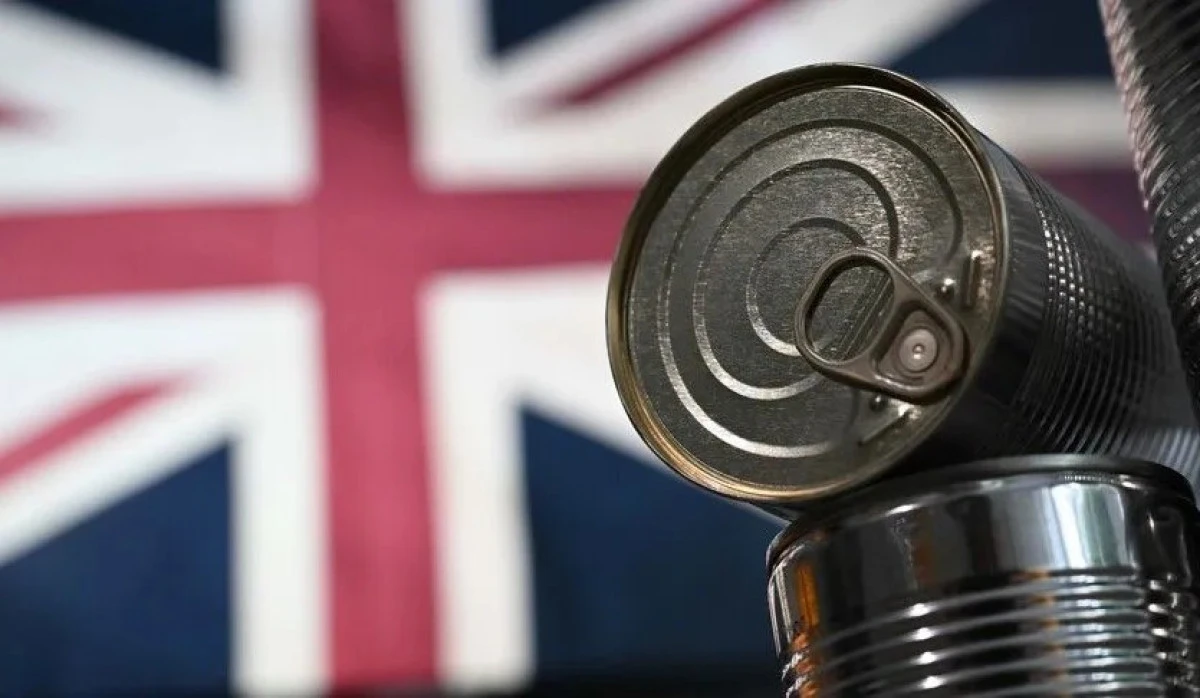
Late last month, the British government launched a national resilience campaign to help households prepare for emergencies. Households are advised to stock up on bottled water, non-perishable food, flashlights and emergency cash – enough to survive at least 72 hours without power or internet access.
The advice came alongside a stark timeline from UK Defense Secretary Wes Streeting – Britain must be ready to fight a major war within 1,000 days.
Across the West, governments are placing growing emphasis on preparing households, essential infrastructure and military installations for prolonged disruptions.
The European Commission's preparedness strategy, unveiled in March 2025, also called for households to maintain essential supplies for at least 72 hours. It addresses threats ranging from conflict and cyberattacks to natural disasters.
Across the Atlantic, the Pentagon is developing plans for US military bases to operate for at least 90 days without outside support, according to documents reviewed by Fox News.
The FORTRESS initiative envisages microgrids, portable nuclear reactors and strategic stockpiles to sustain operations if civilian infrastructure and supply chains are disrupted.
But some critics warn a cycle of fear risks turning war into a self-fulfilling prophecy.
Why are Western governments preparing for major disruptions?
From Brussels to Washington, governments and military planners are increasingly emphasizing the need to protect essential services and infrastructure during crises.
The approach, often described as "total defense" or a "whole-of-society" strategy, recognizes that modern conflicts can disrupt civilian life far beyond the battlefield.
While Western defense planning has long addressed threats to domestic infrastructure, military strategists increasingly warn that cyberattacks, sabotage and other forms of hybrid warfare erases the line between military targets and civilian life.
NATO and European Union preparedness frameworks identify several vulnerabilities that could have serious consequences for civilian populations.
Cyberattacks could disrupt electricity grids, financial networks and water treatment facilities.
Undersea telecommunications cables and natural gas pipelines could be vulnerable to sabotage, threatening communications and energy supplies.
Disruptions to global supply chains could restrict access to semiconductors, pharmaceuticals and critical raw materials.
Attacks on communications and satellite systems, including GPS jamming and satellite jamming,cripple domestic transport networks and commercial logistics within hours..
NATO has emphasized the importance of civilian infrastructure to military operations, noting that approximately 75% of host-nation support for its operations comes from local commercial infrastructure and services.
'We are witnessing a self-reinforcing cycle of fear'
While military planners present stronger preparedness measures as a way to deter attacks and reduce vulnerabilities, some analysts question the effects of repeated warnings about an approaching war.
Iain Overton, executive director of Action on Armed Violence (AOAV), told Anadolu that Western countries risk entering a cycle in which warnings about conflict reinforce public anxiety.
“There is a real danger that we are witnessing a self-reinforcing cycle of fear,” Overton said. “Politicians warn of an approaching war, the media amplifies those warnings, and the resulting public anxiety is then used to justify further military spending and increasingly alarming political rhetoric. Before long, the possibility of war begins to be presented as its probability, and then almost as its inevitability.”
Overton also questioned what he described as contradictory portrayals of Russia's military capabilities.
"On the one hand, Russia is presented as an existential threat to the whole of Europe, capable of confronting NATO militarily," he said.
"On the other, we are repeatedly told that its economy is weak, its military has suffered enormous losses and it has struggled to defeat Ukraine. If Russia has struggled so profoundly in Ukraine, why would it deliberately open a vastly larger war against the combined military power of NATO?"
The preparedness push comes as NATO members pursue higher defense and security spending targets, including a commitment to reach 5% of gross domestic product by 2035.
For critics like Overton, the speed of this shift raises uncomfortable questions about who benefits from the militarization of public life.
"Many of those warning that a third world war is approaching are former military officers, defense consultants or individuals with professional and financial connections to the arms industry," he said.
“An industry that stands to gain enormously from rising defense expenditure should not be allowed to dominate the public conversation about whether such expenditure is necessary.”
There is also a domestic political convenience to externalizing threat, Overton argued.
Governments struggling with crumbling healthcare, housing shortages and sluggish economic growth find a powerful unifying force in the threat of an external enemy, he said. A population preoccupied with survival preparedness is inevitably less inclined to press ministers on domestic policy failures.
Critics also argue that conflating general emergency preparedness with preparation for imminent war risks distorting public policy.
“Britain should be far better prepared for disruptions to electricity, water, communications, food supplies and other essential services,” Overton said.
“But those disruptions could arise from climate change, extreme weather, cyberattacks, pandemics or infrastructure failure just as readily as from conventional warfare. Presenting every resilience measure as preparation for an imminent war risks creating unnecessary fear.”
Overton warned that an emphasis on preparing for conflict should not come at the expense of efforts to prevent it.
“My fundamental concern is that we are increasingly treating war as something to prepare society to accept, rather than something that diplomacy, political imagination and international institutions should be working relentlessly to prevent,” Overton said.
"The question should not simply be whether Britain is ready to fight a war in 1,000 days. It should be what Britain is doing over those 1,000 days to ensure that such a war never happens.”
Yorumunuz başarıyla alındı, inceleme ardından en kısa sürede yayına alınacaktır.