

Night falls, history comes alive at Türkiye's Temple of Apollo
Night falls, history comes alive at Türkiye's Temple of Apollo

2,500-year-old archaeological site offers evening visits during summer as part of Türkiye's nighttime museum initiative
One of the ancient world's most important oracle sanctuaries is welcoming visitors after sunset as the Temple of Apollo on Türkiye's Aegean coast extends its opening hours under a nighttime museum initiative.
Illuminated after dark, the roughly 2,500-year-old temple in the seaside town of Didim offers visitors the chance to explore its monumental ruins and mythological heritage in the cooler evening hours during the peak summer season.
Built in the Ionic architectural style, the Temple of Apollo was one of antiquity's most renowned centers of prophecy, second only to the Oracle of Delphi in ancient Greece. It is also regarded as the third-largest temple in the ancient Greek world.
Located in the heart of modern-day Didim, the archaeological site has undergone excavations and restoration work since 1905. The work has been overseen by the Milet Museum Directorate since 2024.
Evening visits during the summer
As part of the Turkish Culture and Tourism Ministry's Legacy for the Future project, the temple joined the country's nighttime museum program last year.
From June 1 to Oct. 1, visitors can tour the site between 7 pm and 9 pm, allowing many tourists -- who often spend the hottest hours of the day on nearby beaches -- to visit one of the region's best-known ancient monuments in more comfortable temperatures.
The illuminated ruins reveal the scale of the sanctuary, where 112 columns once surrounded the naos, or sacred inner court. Some of the surviving columns rise to about 17.5 meters (57 feet).
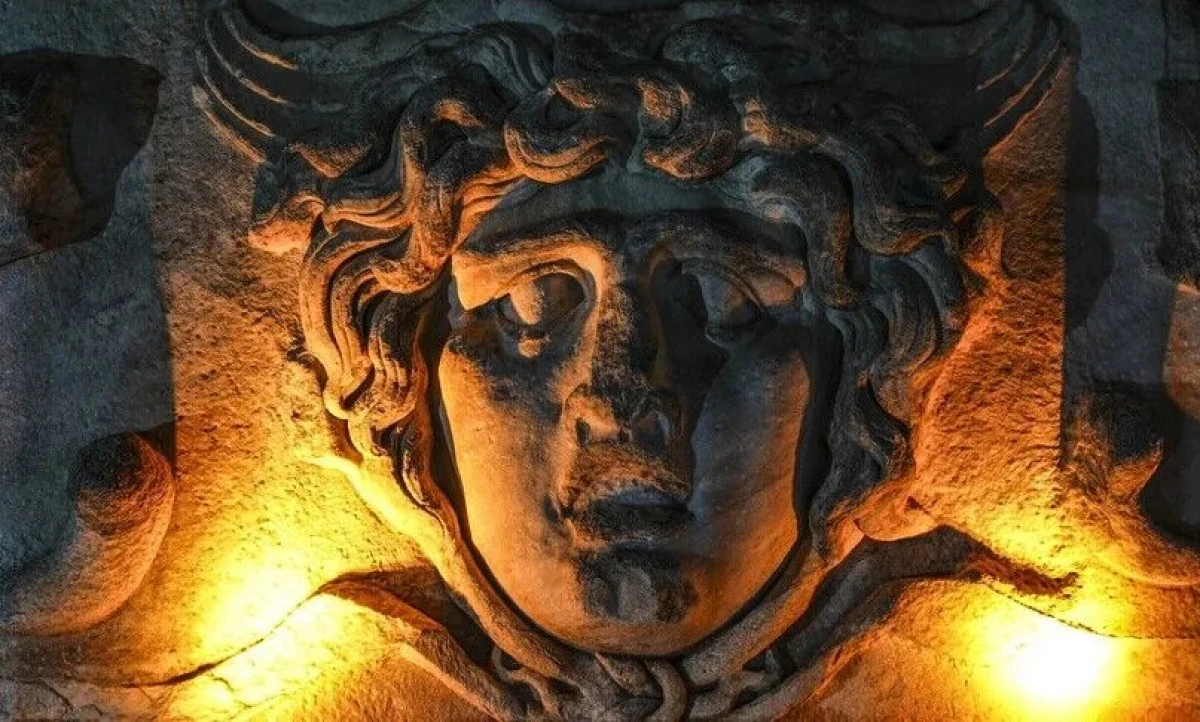
The temple is also known for its carved depictions of Medusa, the snake-haired figure from Greek mythology whose gaze was said to turn people to stone. Illuminated at night, the reliefs take on an even more dramatic appearance.
Dedicated to Apollo, the Greek god associated with music, poetry, the arts and prophecy, the sanctuary was once a destination for rulers and pilgrims seeking guidance from its famous oracle.
'The mystery of the night creates a different atmosphere'
Acting Milet Museum Director Arife Aslan said the temple dates to the 7th century BC and went on to become one of the most influential oracle centers of the ancient world.
"After the Temple of Delphi in Greece, it was the most famous oracle sanctuary of its era," Aslan told Anadolu. "It received support from kingdoms and attracted large numbers of visitors. That is one of the main reasons its reputation endured for centuries."
She said the nighttime museum program offers visitors a different way to experience the site's history and mythology.
"This is already one of the most visited archaeological sites in Aydin province during the day," Aslan said. "We launched the nighttime program last year, and it has increased both visitor numbers and the site's popularity."
"Rather than exploring the temple in the midday heat, visitors can experience it under carefully designed lighting in the evening. The night has its own mystery, and that creates a completely different atmosphere."
Yorumunuz başarıyla alındı, inceleme ardından en kısa sürede yayına alınacaktır.