

Geopolitics of memory: Why Israel turned to the Armenian question now
Geopolitics of memory: Why Israel turned to the Armenian question now
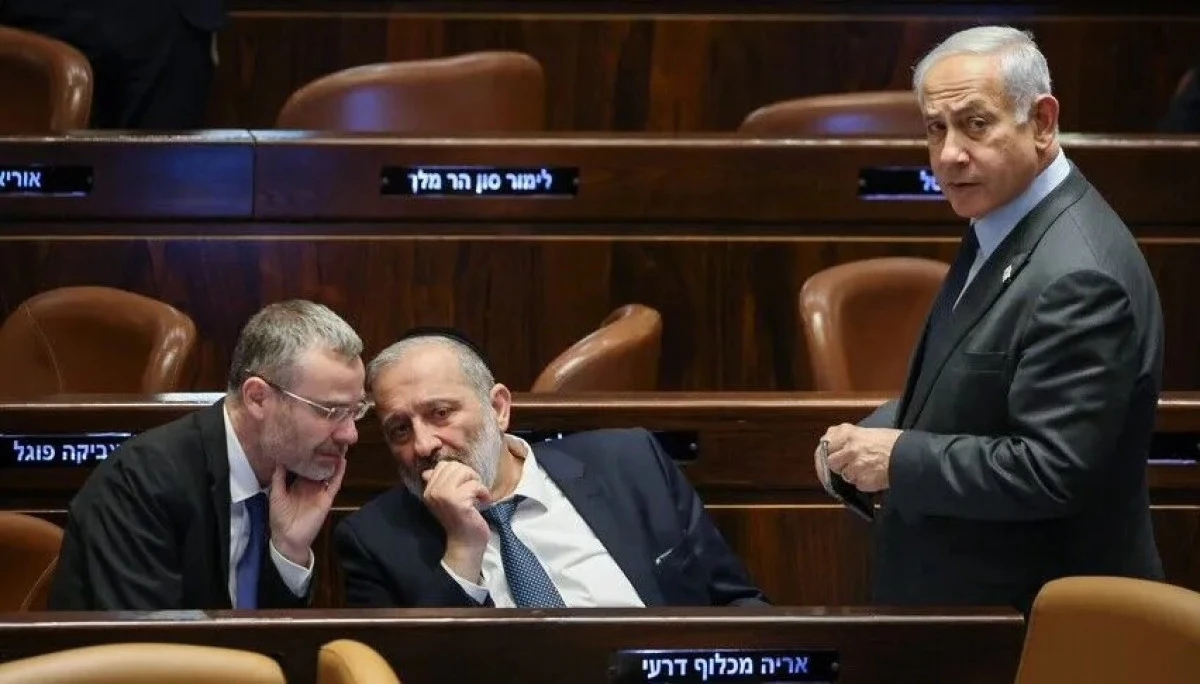

Israel's government is the most isolated in the nation's history, facing international legal scrutiny and eroding global legitimacy. In this state, Israel is burning through its last remaining diplomatic cards to lash out against its critics.
In October 2019, the US House of Representatives voted 405-11 to adopt House Resolution 296, declaring it US policy to commemorate the "Armenian 'Genocide' through official recognition and remembrance" and to "reject efforts" associating the United States with its denial. Less than two years later, President Joe Biden became the first American president in decades to formally use the term "genocide" in an official presidential statement.
By then, relations between Washington and Ankara had deteriorated sharply over Türkiye's role in Syria, its purchase of the Russian S-400 missile defense system, and broader disagreements over regional security. These developments drove the congressional vote and Biden's subsequent recognition, creating the geopolitical backdrop that finally made this supposedly "moral" position politically possible.
The contradiction became even more striking after October 2023. The same administration that had positioned itself as a moral arbiter on historical controversies became Israel's principal military, diplomatic, and financial backer of the genocide in Gaza. Although international bodies, UN experts, human rights groups, and genocide scholars documented the reality of Israel's extermination campaign, Washington dismissed the "genocide" characterization and continued to supply Tel Aviv with weapons and diplomatic cover. This was not merely a disagreement over legal terminology. It reflected a broader pattern in which the language of universal morality appeared remarkably flexible when applied to allies, especially Israel.
Meanwhile, the human toll continued to mount. The official figures released by Gaza's health authorities document more than 73,000 deaths, while a widely discussed analysis published in The Lancet argued that the eventual mortality—including indirect deaths caused by hunger, disease, displacement, and the destruction of Gaza's healthcare system—could reach 186,000 or even higher, or nearly 8% of Gaza's population.
Gaza factor in Tel Aviv's pivot
Against that backdrop came another extraordinary political development. On June 28, 2026, the Israeli Cabinet unanimously approved Foreign Minister Gideon Saar's proposal to formally recognize what they term the "genocide committed against the Armenian people during the final years of the Ottoman Empire" and to firmly condemn any "denial, minimization, or distortion of historical truth," pending final legislative approval. For decades, successive Israeli governments has deliberately avoided such language because it did not suit their strategic interests. The reasons were well known: preserving relations with Türkiye, maintaining strategic cooperation with Azerbaijan, and avoiding unnecessary regional friction.
Those calculations have now changed. Relations between Israel and Türkiye have collapsed to their lowest point in decades. Turkish President Recep Tayyip Erdogan has emerged as one of Israel's most vocal international critics over the Gaza genocide. Ankara has supported international legal initiatives against Israel, sharply curtailed bilateral relations, and increasingly positioned itself as an advocate for Palestinian rights in international forums.
On Gaza, Türkiye remains one of Israel’s strongest critics. Turkish civil society, in particular, continues to be among the most active worldwide, consistently mobilizing humanitarian aid, organizing mass protests, and supporting various international legal and grassroots initiatives designed to break the siege of Gaza and challenge Israeli actions on the global stage.
Meanwhile, Türkiye's expanding regional influence runs directly counter to Israel's geopolitical agenda, which remains tethered to conflict, war, and colonial expansion. In Syria, Ankara has consistently argued that long-term stability depends upon preserving the country's territorial integrity and rebuilding state institutions, while Israel has invested in expanding its military footprint and deepening ties with secessionist groups and minorities. The two countries now view Syria through fundamentally different strategic lenses. Concerning Iran, Türkiye has repeatedly opposed military escalation and emphasized diplomacy even as Israel has advocated a far more confrontational approach. Ankara has maintained communication channels across regional divides, positioning itself as a diplomatic actor rather than a participant in military confrontation.
Why Israel fears a stable Caucasus
Perhaps most importantly, Türkiye has continued pursuing normalization with Armenia despite decades of mutual distrust. Although progress has been gradual, discussions over reopening borders, restoring transport links, expanding trade, and normalizing diplomatic relations represent one of the most significant opportunities for long-term stability in the South Caucasus. Such normalization would not simply improve bilateral relations; it could reshape regional connectivity between Europe and Asia while reducing one of the region's oldest geopolitical fault lines.
Israel's recent move is most likely intended to influence that process as its timing inevitably raises questions. Diplomatic decisions rarely occur in a political vacuum, particularly when they reverse decades of carefully maintained policy. Indeed, for Israel, closer Turkish-Armenian ties are entirely unacceptable. For decades, Israeli foreign policy in the South Caucasus has banked on a perpetual feud—a fractured regional landscape that Tel Aviv could actively exploit.
The Israeli strategy aligns perfectly with long-standing Israeli geopolitical doctrines, most notably encapsulated by the Yinon Plan. Authored in 1982 by Oded Yinon, then-advisor to the Israeli Foreign Ministry, this strategic blueprint argued that Israel's regional dominance depends entirely upon the deliberate fragmentation, balkanization, and sectarian division of surrounding nations into smaller, weak, and manageable hostile enclaves.
If Türkiye succeeds in fully normalizing ties with Armenia, Israel will lose a critical building block of this regional strategy. A stable, cooperative South Caucasus deprives Tel Aviv of a geopolitical fracture line it has long weaponized to project its power, leaving its policy of sowing chaos, division, and international conflict structurally weakened.
Blurring the lines: Distraction as state policy
There is another vital dimension to Israel's sudden pivot, and it is also related to Gaza. As the international community is forced to confront the grim reality of the Israeli genocide in Gaza, Benjamin Netanyahu and his extremist coalition government are desperate to dilute these facts. By suddenly pushing for Armenian recognition, they hope to shift global diplomatic attention, spark manufactured controversy, and weaponize historical memory to deflect attention from the genuine genocide Tel Aviv is committing today.
This cynical policy of manufacturing false historical parallels is a strategy that Israel has utilized for decades. Following every major massacre it has carried out against Palestinians, Lebanese, and other regional populations, Tel Aviv has systematically reached for historical distractions to blur the lines of contemporary accountability.
Ultimately, one cannot ignore the palpable element of desperation in this behavior. The current Israeli government is arguably the most isolated in the nation's history, facing unprecedented international legal scrutiny and eroding global legitimacy. In this state of acute isolation, Israel is burning through its last remaining diplomatic cards to lash out against its critics. Given these stakes, Türkiye and Armenia must find their common ground directly. Neither the United States nor Israel genuinely cares about the future of the Armenian people, or about their past. These geostrategic ploys are not acts of “moral awakening”; they are calculated maneuvers designed to sow fragmentation, chaos, and perpetual regional dependency.
Yorumunuz başarıyla alındı, inceleme ardından en kısa sürede yayına alınacaktır.