

NATO Parliamentary Summit: New security architecture and Türkiye's role within
NATO Parliamentary Summit: New security architecture and Türkiye's role within

In the future, Europe—provided it has sufficient capital—could emerge from this 'NATO 3.0' process stronger, on one condition: the inclusion of Türkiye in the European equation
Murat Aslan is an associate professor at Hasan Kalyoncu University in Gaziantep, Türkiye, and a senior researcher at the Foundation for Political, Economic and Social Research (SETA), a think tank based in the Turkish capital Ankara.
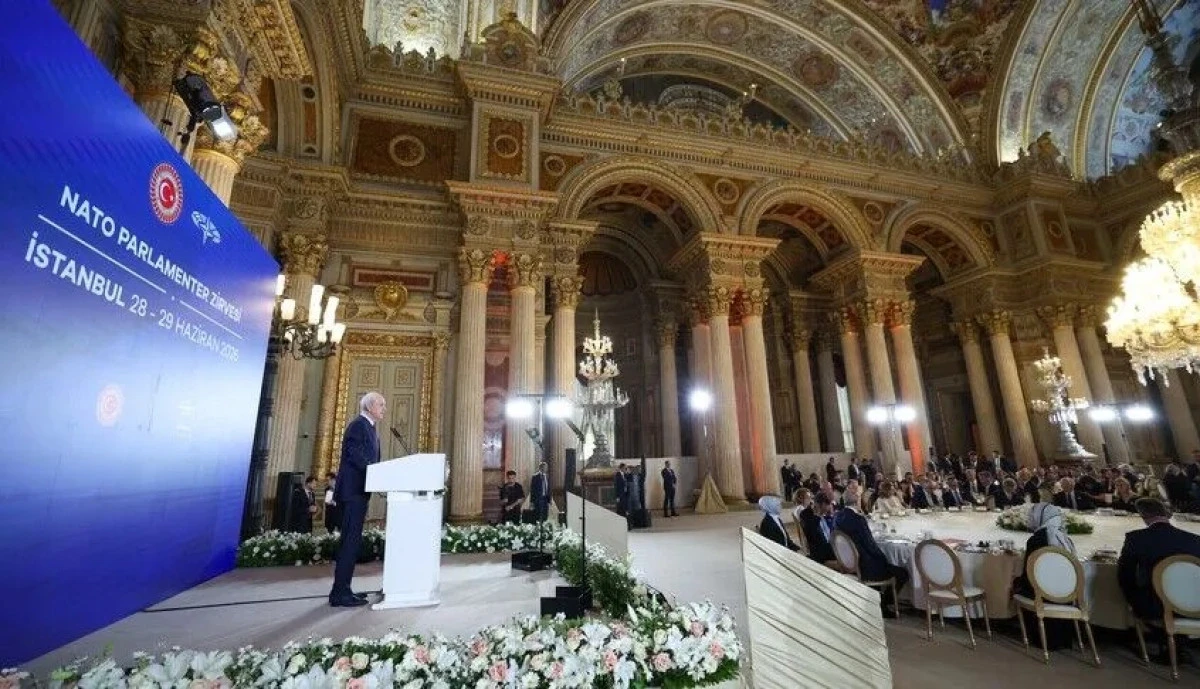
The NATO Parliamentary Summit was held this year for the first time in a different format on June 28-29 in Istanbul. Before discussing what made this session unique, the scope of the consensus reached and its implications for the NATO alliance, it is worth reviewing what NATO Parliamentary Assembly meetings actually are.
Structure and function of NATO Parliamentary Assembly
The NATO Parliamentary Assembly, which aims to anchor the political will of NATO members in a democratic foundation, was established in 1955 under the name Conference of Parliamentarians of NATO Countries. Its name was later changed to NATO Conference of Parliamentarians and, in 1999, it became NATO Parliamentary Assembly—NATO PA.
The assembly’s primary objective is to foster mutual understanding among parliaments on the security challenges facing the transatlantic partnership. Independent of NATO, the assembly serves as a bridge between NATO and the parliaments of its member countries. The assembly’s core mission is defined as promoting parliamentary awareness and oversight, fostering transatlantic solidarity, securing public support, and upholding democracy and the rule of law.
The core structure of the assembly consists of the General Assembly—which meets twice a year—the Presidium, and the Secretariat, along with the Standing Committee, which maintains contact with NATO and the various committees and subcommittees focused on specific areas. This structure, which parliamentarians are eager to be part of—more so than other parliamentary duties—provides informal access to the security and political elites of NATO and its member countries. Furthermore, while the number of seats in the assembly is determined based on the population of member countries (currently 281), there is also non-voting representation from NATO partner countries and other international organizations.
The assembly, which serves as an advisory body, sets the agenda for its spring and annual sessions. It prepares reports through committees, subcommittees, and special working groups and submits them to NATO headquarters. The NATO secretary general may attend assembly meetings. Similarly, the assembly president may attend NATO summits or meet with NATO officials as needed. In this way, the will of NATO’s member nations is incorporated into NATO as a single vision. Furthermore, through large-scale events organized in non-NATO countries under the Rose-Roth Program, NATO’s democratic image is presented to its partners.
Since the assembly cannot legally adopt binding decisions regarding NATO, it serves mainly as an advisory body that exerts indirect influence. In this context, the assembly issues recommendations, and the secretary general is obligated to respond to these. Parliamentarians who are members of the assembly convey NATO’s common interests to their own parliaments and foster a consensus. They facilitate political consensus on the NATO agenda within parliaments, which are the primary decision-making bodies in democratic countries. Similarly, committee reports also contribute to shaping NATO’s agenda. The assembly also serves as an informal source of oversight and legitimacy. Ultimately, it can be argued that the meeting of NATO member country parliamentarians in Türkiye will have repercussions both within NATO and in the parliaments of member countries.
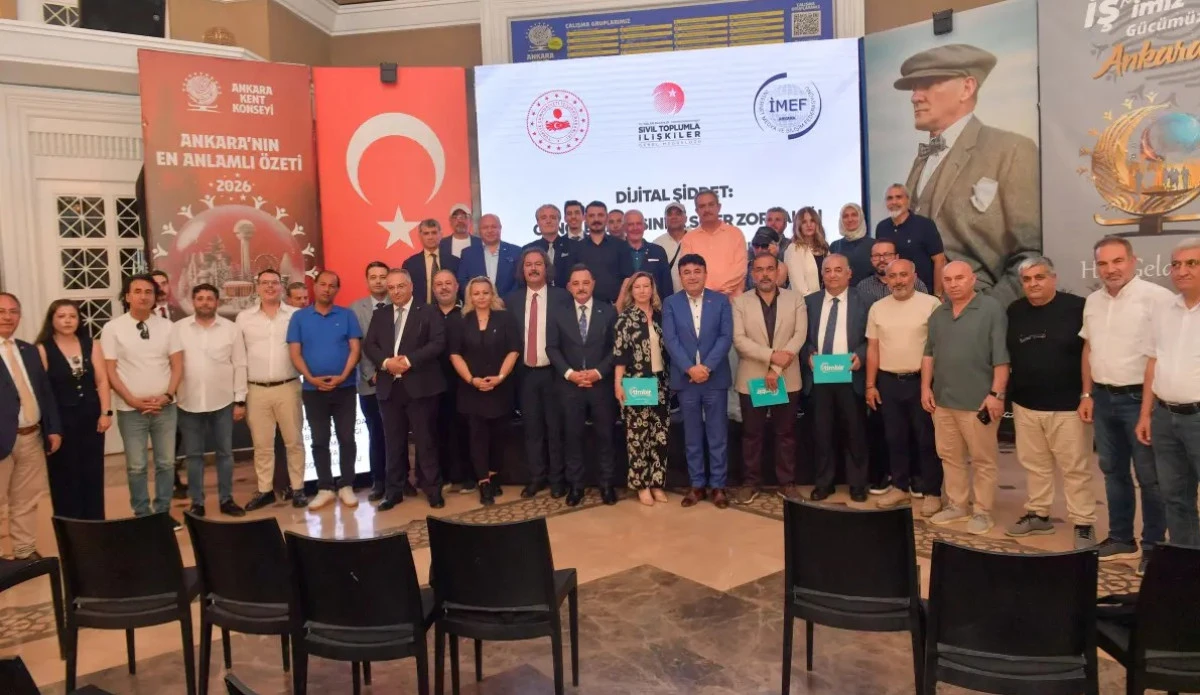
In line with the assembly’s structure and function, the NATO Parliamentary Assembly convened in Istanbul with the presence of 20 parliament speakers, three deputy speakers, NATO Parliamentary Assembly President Marcos Perestrello, NATO Deputy Secretary General Radmila Shekerinska, and members of the NATO PA Presidium.
Key highlights from summit's agenda
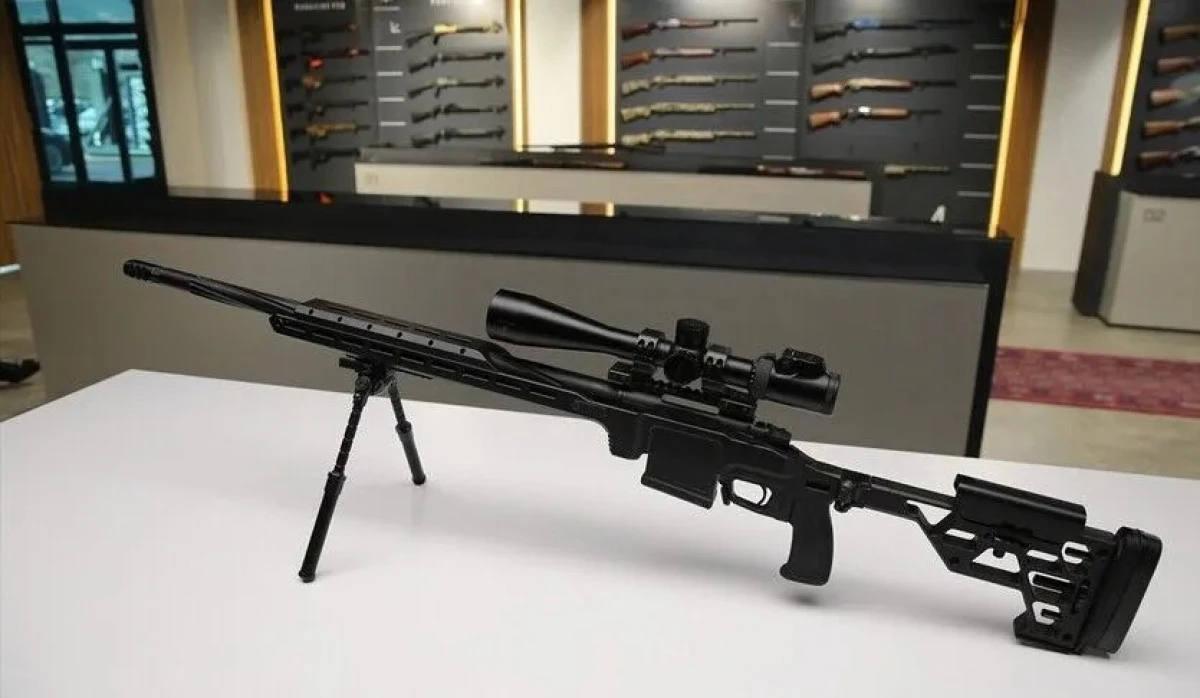
Regional and global issues were discussed during a meeting attended by Turkish President Recep Tayyip Erdogan. In addition, assembly members paid visits to defense industry firms and technology centers. Ahead of the July 7-8 NATO leaders’ summit in Ankara, it is not difficult to predict the agenda of that event. The three key points NATO Secretary General Mark Rutte stressed while speaking to Anadolu are also occupying the attention of parliamentarians and NATO officials. These can be summarized as defense spending, support for Ukraine, and NATO 3.0.
The first of the three issues in question—defense spending—is an agenda item that the US has rightly pushed. However, it is not very wise to finalize defense spending both at the assembly and at the NATO leaders’ summit without acknowledging the inconsistencies. The US wants NATO members’ defense spending to flow to American companies. Europeans, who until the war in Ukraine had not paid the price for American security guarantees and had become welfare states, intend to allocate EU defense funds to European companies.
At this point, it is worth noting an interesting detail. While France, the United Kingdom, and Italy—countries with large armies in Europe—still spend slightly more than 2% of their GDP on defense, Germany could come close to 3% with its 2025 spending. In terms of GDP, an interesting situation regarding the US comes to the fore. While the US allocated 3.61% of its GDP to defense in 2020, for 2025this figure dropped to 3.22%. Consequently, while major European powers have reached the 2% mark, they remain far from the 3.5% interim target. The US, on the other hand, appears to be cutting rather than raising its defense spending for 2025. Consequently, the agenda of the NATO Parliamentary Assembly centers on where defense spending will be directed and what level of defense budget will be approved.
European and American views of the Ukraine war—the second topic—are emerging on different levels. The US has made its support for Ukraine contingent on European funding. On the other hand, it has allocated resources in the Gulf to counter Iran equivalent to those spent on Ukraine. In contrast to the US policy of concessions toward Russia, NATO’s European members are taking a more radical stance. The EU, which has allocated €90 billion in EU funds for Ukraine, is demanding full implementation of economic sanctions and a policy of isolating Russia. It can be said that the NATO Parliamentary Assembly presents a divided view on this issue. While Europeans and Americans are at odds, it is well known that Democrats and Republicans in the US are also divided on the issue. Europeans will thus need to convince the US in Istanbul on the Ukraine issue.
NATO 3.0: A ‘fend for yourself’ message to Europe?
Finally, NATO 3.0 is coming to the fore. In fact, this concept is an American demand that Europeans have been forced to accept. Under this approach, which divides NATO’s mission in Europe into two main parts, while military deployments on the Russian front and the south-southeast flank are delegated to the Europeans, American hegemony persists in the nuclear umbrella, technology-based capabilities, and intelligence capabilities.
US Deputy Defense Secretary Eldridge A. Colby highlights China within the conceptual framework of the "Strategy of Denial—Pushback (or Rejection) Strategy." This strategy, which contradicted itself through the intervention in Iran, is sending a "fend for yourself" message to Europe. Thus, the scope of NATO 3.0 is under the scrutiny of both assembly members and NATO leaders.
The so-called "NATO 3.0" argument has the potential to steer defense policies in a different direction within the parliaments of NATO member countries. Although the EU is currently facing sensitivities due to this American demand, it is not in a position of weakness. In the future, Europe—provided it has sufficient capital—could emerge from this process stronger, on one condition. That condition is Türkiye's inclusion in the European equation.
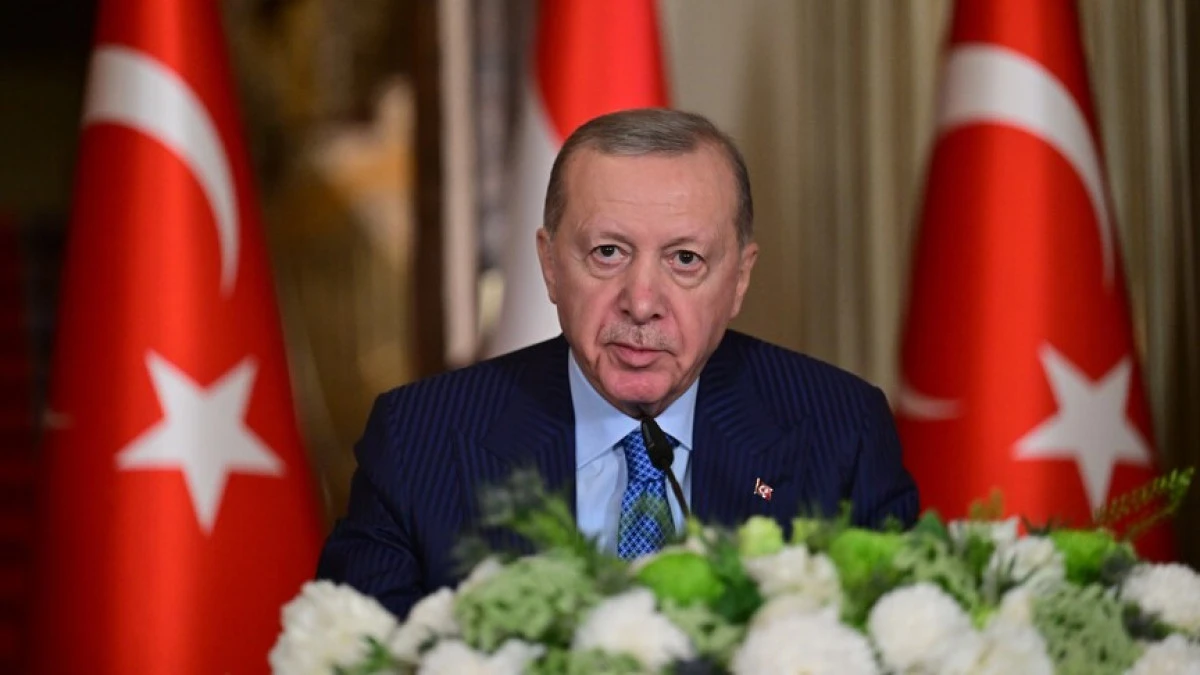
The behind-the-scenes agenda at the NATO Parliamentary Assembly’s Istanbul meeting actually revolves around what role Türkiye will be assigned under the NATO and EU umbrella. In his speech, President Erdoğan clearly conveyed the message that Türkiye must not be excluded from European defense. During EU foreign policy chief Kaja Kallas’s visit following the assembly, Europe’s approach to this demand is also being discussed.
For an aging Europe, integrating with a dynamic and capable Türkiye to build a defense architecture is not a luxury; it is a political, military, and geopolitical necessity. The speakers of the parliaments and parliamentarians of NATO member countries also observed this argument firsthand. On the other hand, it should be remembered that the European Parliament—which is burdened by prejudice and influenced by Greek and Cypriot maneuvers—must also be included in this positive atmosphere.
Yorumunuz başarıyla alındı, inceleme ardından en kısa sürede yayına alınacaktır.