

TIMELINE - 1,000 days of Israel’s genocide in Gaza
TIMELINE - 1,000 days of Israel’s genocide in Gaza

Timeline outlines key events since 2023, including Israeli bombardment, mass displacement and worsening famine in Gaza
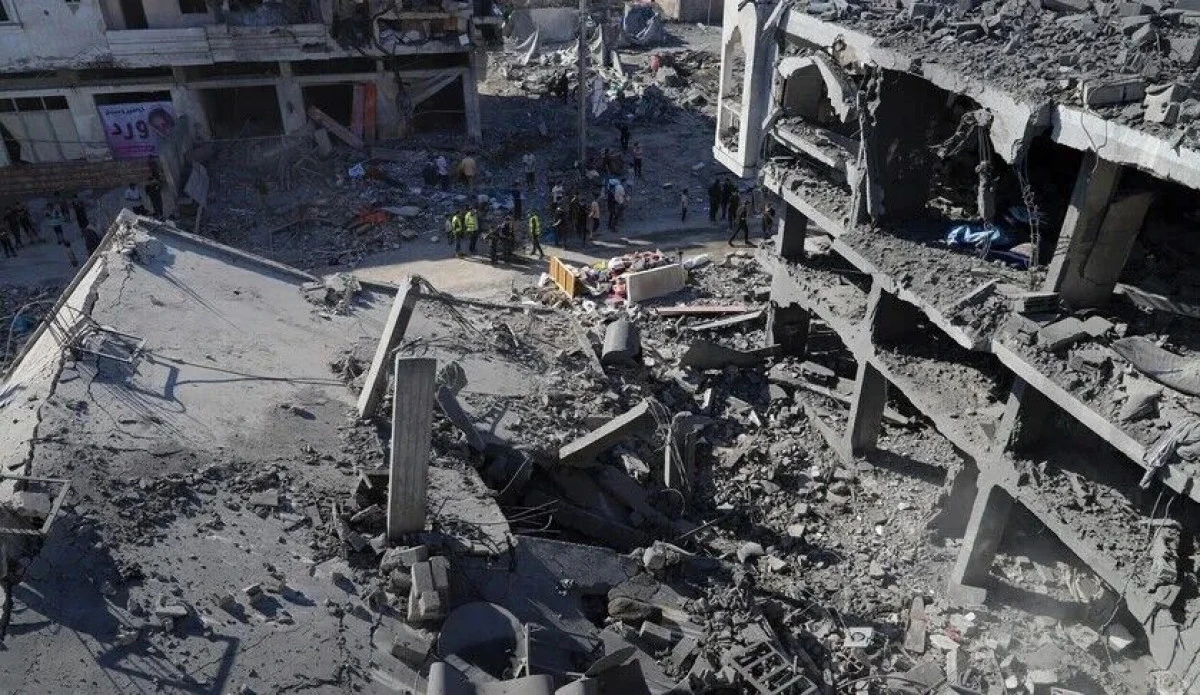
Israel’s genocide in the Gaza Strip marks the passage of 1,000 days since it began on Oct. 8, 2023, amid an unprecedented humanitarian catastrophe and vast destruction affecting all aspects of life.
Although a ceasefire agreement took effect on Oct. 10, 2025, Israel continued its attacks and home demolitions in the enclave, expanded its occupation to about 70% of Gaza’s territory and confined Palestinians to a narrow area that does not exceed 30%.
Over 1,000 days, the genocide has passed through major military, political, legal and humanitarian turning points. Anadolu outlines the key events as follows:
2023
*Oct. 7: Hamas launches a two-pronged attack involving the firing of about 5,000 rockets and the infiltration of fighters into Israeli settlements and military sites near Gaza in an operation it named “Al-Aqsa Flood.”
The confrontations kill 1,200 Israelis, injure 5,431 others, and lead to the capture of others, while Hamas said the operation was a response to Israeli attacks in the occupied West Bank and Al-Aqsa Mosque.
The Israeli army responds with initial airstrikes in an operation code-named “Swords of Iron,” while Prime Minister Benjamin Netanyahu declares that Tel Aviv is in “a state of war,” and closes Gaza’s crossings.
*Oct. 13: Israel orders Palestinians in Gaza City and the northern governorates, home to about 1.2 million people, to evacuate their homes ahead of bombardment.
*Oct. 27: Israel begins a ground operation in the northern governorate, later expanding it into other areas of central and southern Gaza over the following weeks and months, claiming the aim was to “eliminate Hamas’ military power.”
*Early November: The Israeli army establishes the Netzarim Corridor to separate northern Gaza from the south. It partially withdraws from the corridor under a January 2025 ceasefire agreement but remains around eastern areas parallel to Salah al-Din Street.
*Nov. 17: The UN Agency for Palestinian refugees (UNRWA) says about 800,000 Palestinians in Gaza City and northern Gaza face the risk of famine due to Israel’s prevention of humanitarian aid from entering.
*Nov. 24: A temporary four-day humanitarian pause begins between Israel and Hamas, mediated by Qatar, Egypt and the US. It gets extended by two additional days, then one more day, during which a temporary ceasefire is observed, prisoners are exchanged and limited humanitarian aid enters Gaza.
*Dec. 3: The Israeli army begins a ground operation north of Khan Younis in southern Gaza. It orders displaced people to evacuate neighborhoods it had previously classified as “safe,” before withdrawing from the area on April 7, 2024.
*Dec. 29: South Africa files a case against Israel at the International Court of Justice (ICJ), accusing it of genocide. Twelve countries later join the case before the court issues provisional measures in March 2024 to prevent genocide and improve the humanitarian situation in Gaza. A final ruling has not yet been issued.
2024
*Jan. 3: Israel assassinates Saleh al-Arouri, deputy head of Hamas’ political bureau, in a strike on a house in the Lebanese capital Beirut.
*March 25: The UN Security Council adopts, for the first time, a resolution calling for an immediate ceasefire in Gaza during the Muslim holy month of Ramadan, but Israel does not implement it.
*May 6: The Israeli army announces the start of a military operation in Rafah in southern Gaza, ignoring international warnings over its consequences. The next day, it seizes control of the Rafah crossing, and it continues to fully occupy the city.
*May 29: The Israeli army announces operational control of the Philadelphi Corridor along the Gaza-Egypt border, before taking military control of it on June 7.
*May 31: Then US President Joe Biden says Israel had submitted a three-phase proposal that included a full ceasefire, withdrawal from all areas, prisoner exchange and reconstruction. Hamas accepts it before Netanyahu reverses course and adds new conditions, obstructing the agreement.
*June 8: Israel kills 274 Palestinians, including 64 children and 57 women, in intense bombardment of the Nuseirat refugee camp in central Gaza during an operation to free four Israeli captives, drawing widespread condemnation.
*June 25: The Integrated Food Security Phase Classification (IPC) issues a report saying 95% of Palestinians in Gaza are experiencing varying levels of famine.
*July 31: Israel assassinates Hamas chief Ismail Haniyeh in an attack on his residence in the Iranian capital Tehran, triggering broad condemnation.
*Aug. 6: Hamas announces the selection of Yahya Sinwar as head of the group’s political bureau, succeeding Haniyeh.
*Aug. 20: The Israeli army announces the recovery of the bodies of six of its captives in a joint operation with the Shin Bet security service in Khan Younis, southern Gaza.
*Oct. 6: The Israeli army announces a military operation in the Jabalia refugee camp in northern Gaza and imposes a tight siege on it before withdrawing from parts of the area when a truce begins in January 2025.
*Oct. 17: The Israeli army announces Sinwar’s killing in an armed clash in Rafah.
2025
*Jan. 19: A ceasefire agreement between Hamas and Israel begins, consisting of three phases, each lasting 42 days. It includes the release of 33 Israelis in exchange for a number of Palestinian prisoners.
*Jan. 30: The Qassam Brigades, Hamas’ armed wing, announce the killing of commander Mohammed Deif and six members of its military council, including Marwan Issa, deputy chief of staff, during Israel’s genocide, without giving details on the assassinations.
*March 2: Israel closes all crossings leading to Gaza to humanitarian, relief and medical aid, as well as goods, further worsening living conditions and famine.
*March 14: US Middle East envoy Steve Witkoff submits a ceasefire proposal that includes Hamas releasing five living Israeli captives, handing over the bodies of dead captives and continuing negotiations on extending the agreement.
Israel claims it had accepted the proposal and that Hamas rejected it, while Hamas says the proposal is still under review before Israel resumes the genocide.
*March 18: Israel reneges on the ceasefire agreement and resumes the genocide despite Hamas’ commitment to the deal.
*April 11: The Israeli army announces full control over the Morag Corridor separating Rafah from Khan Younis.
*May 12: The Qassam Brigades release Israeli American soldier Edan Alexander from Gaza after contacts with Washington as part of efforts to secure a ceasefire, open crossings and allow aid and relief supplies into the enclave. Washington and Tel Aviv, however, do not follow through with positive steps.
*May 16: The Israeli army launches the military operation “Gideon’s Chariots,” which continues until Aug. 6. It includes the comprehensive evacuation of Palestinians from combat zones, including northern Gaza and areas in southern Gaza, while the army remains in any area it occupies.
*May 29: Witkoff submits another proposal that includes Hamas releasing 10 living Israeli captives and 18 bodies within a week, a 60-day ceasefire with negotiations to end the war, Israeli army withdrawal to positions held before the collapse of the latest truce and the entry of UN aid. Israel claims to accept it, while Hamas introduces amendments.
Mediators present a proposal very similar to Witkoff’s in August, including the release of 10 living captives and 18 bodies in exchange for a 60-day ceasefire and negotiations to end the war. Hamas accepts it, while Israel rejects it.
*Aug. 8: Israel’s government approves Netanyahu’s plan to gradually occupy the Gaza Strip, beginning with Gaza City, which was home to about 1 million Palestinians. Three days later, the army begins a large-scale offensive that includes destroying residential buildings, bombing hospitals, issuing evacuation orders and conducting incursions.
*Aug. 22: The Integrated Food Security Phase Classification (IPC) announces that famine had broken out in Gaza City and warns it was expected to spread to other areas.
*Sept. 3: Israel announces the launch of “Gideon’s Chariots 2,” an operation aimed at fully occupying Gaza City after encircling it and displacing Palestinians from it.
*Sept. 9: Israel attempts to assassinate a Hamas delegation in Doha, Qatar, killing five Palestinians and a Qatari security officer.
*Sept. 29: US President Donald Trump announces a 20-point plan in two phases, including the release of Israeli captives in Gaza, a ceasefire, the disarmament of Hamas and the formation of an international supervisory body headed by Trump to train an administration for governing Gaza without Hamas participation.
*Oct. 1: The Israeli army bars Palestinians from moving from central and southern Gaza to the north through Al-Rashid Street, which links the enclave along its western side, in a new step to tighten the siege.
*Oct. 3: Hamas announces its approval of the release of all living and dead Israeli captives and the handover of Gaza’s administration to an independent Palestinian body under Trump’s plan.
*Oct. 10: Israel officially announces that the ceasefire agreement takes effect at noon, with the army beginning to withdraw from deep inside Gaza and reposition on new deployment lines under the agreement.
*Oct. 12: Israel allows very limited amounts of aid into Gaza, estimated by the government media office at about 173 trucks, in violation of the agreement, which stipulates the entry of 600 trucks per day.
*Oct. 13: As part of the prisoner exchange deal, Palestinian factions led by Hamas hand over all 20 living Israeli captives in their custody and the bodies of four others. In return, Israel releases 1,968 prisoners, including 250 serving life sentences and 1,718 Gaza detainees arrested after the war began.
*Dec. 29: The Qassam Brigades announce for the first time the killing of its chief of staff Mohammed Sinwar, spokesperson Abu Obeida and several of its commanders during the genocide.
2026
*Jan. 14: Witkoff announces the start of the second phase of the Gaza ceasefire agreement, including the transition to disarmament, the formation of a technocratic government and the start of reconstruction, coinciding with Palestinian meetings in Cairo to discuss the phase.
*Jan. 16: Trump announces the establishment of the “Board of Peace,” as stipulated in his plan. The formation of the body and the “Gaza Executive Council” is announced a day later.
*Jan. 17: Members of a Palestinian national committee tasked with administering Gaza, as stipulated in Trump’s plan, are revealed.
*Jan. 26: The Israeli army says it has found the remains of the last captive in Gaza. Since the agreement took effect, Palestinian factions return the remains of 28 Israelis, in line with the deal.
*Feb. 2: Israel reopens the Palestinian side of the Rafah land crossing between Gaza and Egypt in a very limited manner and under strict restrictions after nearly two years of almost complete closure.
*Feb. 28: Israel announces the closure of crossings in the Palestinian territories, including Rafah, after the outbreak of the US-Israeli war on Iran. The crossing resumes operations on March 19 after a 20-day closure, under the same previous mechanism and restrictions.
*May 15: Netanyahu acknowledges expanding the area under Israeli occupation in Gaza to 60% of the enclave’s total area, contrary to the ceasefire agreement, which stipulates temporary army deployment in about 53% of Gaza ahead of a further withdrawal at a later stage.
*May 15: Israel assassinates Izz al-Din al-Haddad, commander of the Qassam Brigades, in a strike in Gaza City.
*May 26: Israel assassinates senior Qassam Brigades commander Mohammed Ali Khalil Awda in a strike in Gaza City.
*June 6: A round of talks begins in Cairo between Palestinian factions and mediators, the second of its kind in three months, to discuss completing the first phase of the Gaza agreement and entering talks on second-phase arrangements. Neither round produces a result.
*June 24: Netanyahu acknowledges expanding Israel’s occupation of Gaza to 70% of the enclave.
Since October 2023, Israel’s genocide has killed more than 73,000 Palestinians and injured nearly 173,500 others, most of them women and children, and caused massive destruction affecting 90% of civilian infrastructure, with UN-estimated reconstruction costs reaching about $70 billion.
Yorumunuz başarıyla alındı, inceleme ardından en kısa sürede yayına alınacaktır.